
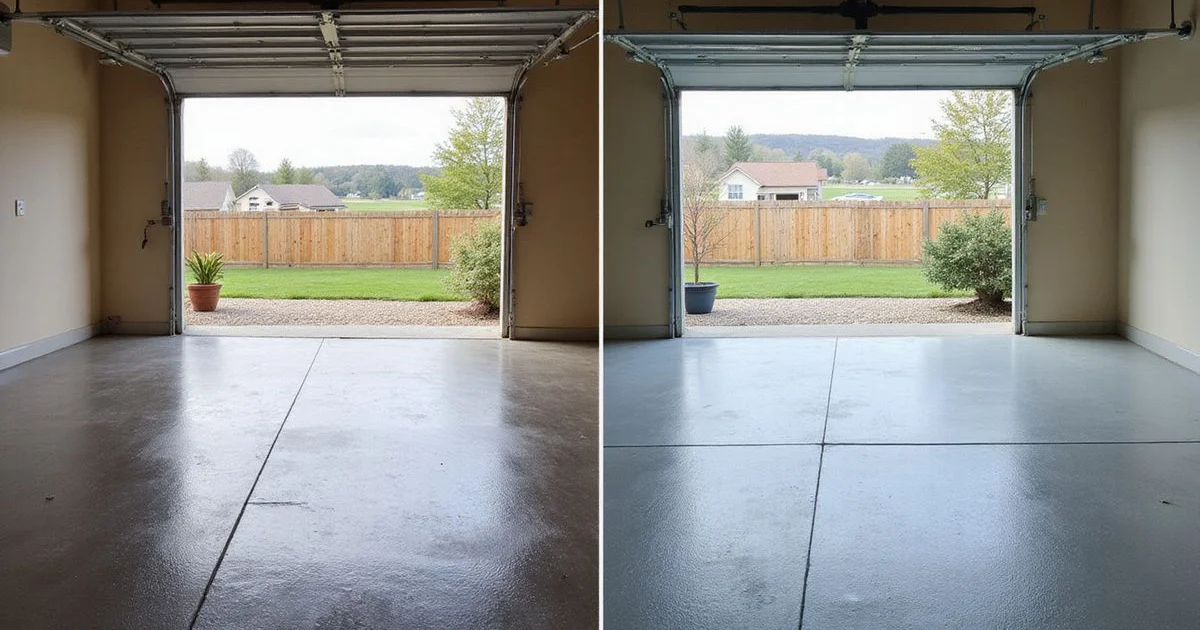
We know how frustrating it is to research concrete protection and hit a wall of conflicting opinions. Many property owners get stuck trying to settle the epoxy vs polyaspartic garage floor debate, assuming they must pick just one winner.
That strict polyaspartic vs epoxy framing misses the mark entirely. Our installation crews actually rely on these distinct chemistries to work together in a well-built garage floor epoxy system, rather than forcing them to compete.
We will look at the real-world data and explore how to combine them for the best garage floor coating possible.
Two Materials, Two Jobs
We define these materials by the specific roles they play in a professional installation. Epoxy serves as a thick, structural foundation, while polyaspartic acts as a flexible, protective surface shield.
These distinct chemistries handle completely different forms of wear and tear.
- The Structural Base: Manufacturer specifications show that standard 100% solids epoxy applies thickly at 10 to 20 mils per coat to hide minor concrete imperfections.
- The Mechanical Bond: This liquid resin sinks deeply into the concrete pores before hardening to establish a permanent grip.
- The Protective Shield: Advanced coating data indicates that polyaspartic, an aliphatic polyurea technology, acts as a fast-curing topcoat.
- The Sun Defense: This specialized clear coat completely resists UV yellowing, keeping the surface looking brand new even with the garage door open.
Our teams combine these two materials to give you the thick adhesion of a resin base paired with the invincible finish of a polyurea top layer.
The Head-to-Head Comparison
We evaluate these two coatings based on cure times, temperature resistance, and average US installation costs. The table below shows exactly how they stack up on the factors that matter most for a durable garage floor.
| Factor | Standard epoxy | Polyaspartic |
|---|---|---|
| Cure time | Several days | Hours |
| UV stability | Poor if left bare | Excellent |
| Hot tire resistance | Weak on its own | Strong |
| Humidity install window | Narrow | Wide |
| Cost | Lower | Higher |
| Best role | Base coat | Topcoat |
The data reveals a very clear pattern of trade-offs. Recent industry pricing analysis shows that basic epoxy wins heavily on budget, often costing around $3 to $7 per square foot for a professional US installation. Polyaspartic commands a premium, usually ranging from $5 to $12 per square foot according to current market averages, but it completely dominates in long-term performance.
After a long highway drive in the summer, automotive data shows car tires can easily reach temperatures over 140 degrees Fahrenheit. Standard bare epoxy softens under that extreme heat, causing the coating to peel right off the concrete when the tires cool. We recommend polyaspartic for the surface because it easily resists this hot tire pickup.
That higher cost of pure polyaspartic is a real factor, which is exactly why hybrid systems exist.
Why the Hybrid System Usually Wins
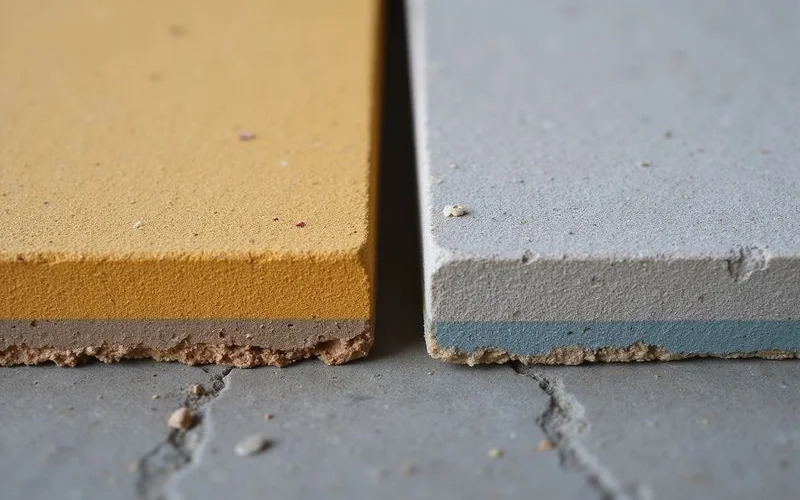
We consider a hybrid coating to be the absolute best solution for the great majority of spaces. This system pairs a 100% solids epoxy base bonded directly to a diamond-ground slab with a highly durable polyaspartic floor coating on top.
Our installation crews rely on epoxy for this foundational step because it achieves an incredible mechanical grip. Engineering tests on high-quality epoxy bases routinely demonstrate adhesion ratings between 400 and 800 PSI, meaning the concrete itself will often fail before the coating peels away.
We then apply the polyaspartic topcoat to provide fast curing, UV stability, and essential hot-tire resistance exactly where the floor takes abuse. You only spend the premium price on polyaspartic where it actually earns its keep, resulting in a premium floor that costs significantly less than pouring high-priced resins at full depth.
The recommendation
For most garages across the US, a hybrid system is the clear winner. Use an epoxy base for unbeatable adhesion and value, topped with a polyaspartic clear coat for UV stability, fast curing, and hot-tire resistance. Reserve pure polyaspartic systems strictly for situations where a same-day return to service is mandatory.
When to Choose Each
We match the coating system to your specific timeline, budget, and daily usage habits. The decision usually comes down to how quickly you need your space back and how much wear the surface will endure.
There are still practical use cases for choosing one specific route over the others.
- Choose a hybrid system if you want the best balance of long-term performance and upfront price. This is the right call for most property owners because structural coating data shows it routinely lasts 15 to 20 years with proper maintenance.
- Choose a pure polyaspartic floor when speed is everything and you genuinely cannot give up the garage for more than 24 hours, a standard cure time for this resin. See our detailed guide on a same-day install for what that fast-tracked timeline looks like.
- Choose a standard epoxy floor with a basic topcoat only for a tight budget on a low-use, climate-controlled space. This saves money initially, but flooring industry averages show it usually requires reapplication within 5 to 7 years due to wear and UV fading.
Our honest assessment of this decision is very short. A hybrid system serves as the safest default recommendation, offering commercial-grade durability without the inflated price tag.
We will always tell you plainly if your specific environment requires one of the exceptions. Reach out to our team today to discuss your epoxy vs polyaspartic garage floor options and schedule a professional consultation.
Questions about your floor?
Real numbers, no pressure — transparent pricing on every system.