
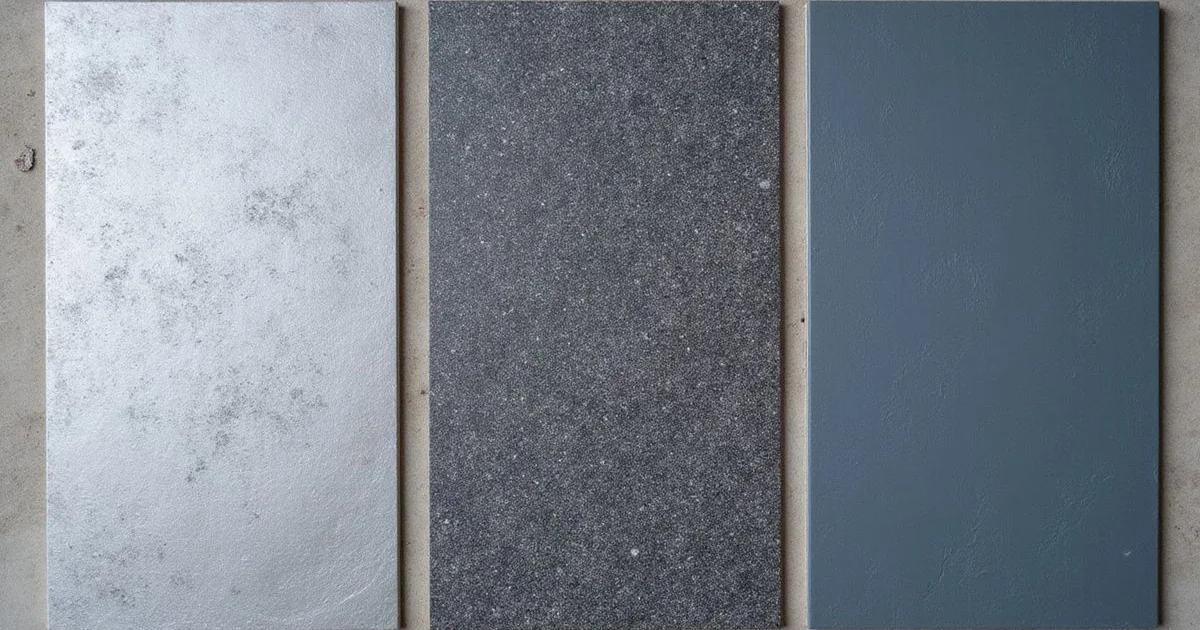
Three Finishes, One Decision
We hear the same debate from property owners across the US every week regarding a metallic vs flake epoxy floor.
The three main options are metallic, flake, and solid color. Choosing the right one feels like a massive commitment.
Our team knows the underlying system is usually the exact same mix of prep work, a solid base, and a clear topcoat. The visual finish you choose is what completely changes the final result.
Consider these three factors before making a choice:
- Your project budget
- The daily traffic in the space
- Your slip resistance needs
Our guide breaks down the pros, cons, and actual 2026 pricing so you can make a smart call. Let us look at the data, what it actually tells us, and explore a few practical ways to pick the right one for your space.
This will help you decide if you want dramatic metallic finishes or a simple solid tone.
The Side-by-Side Comparison
We compiled this 2026 data to give you a clear baseline before making a choice. Comparing these facts side-by-side reveals exactly where your money goes with each system. A quick glance at the table below shows the key differences.
| Factor | Metallic | Flake | Solid color |
|---|---|---|---|
| Look | 3D, marble-like, dramatic | Textured, speckled | Clean, uniform |
| Cost (2026 US Avg) | $9 to $12 per sq. ft. | $8 to $12 per sq. ft. | $4 to $10 per sq. ft. |
| Slip resistance | Low (add Aluminum Oxide) | High (meets 0.50 COF) | Low (needs additive) |
| Hides dust and scuffs | Moderate | Excellent | Poor |
| Repairability | Difficult | Moderate | Easiest |
| Best for | Statement spaces | Everyday garages | Budget, simple look |
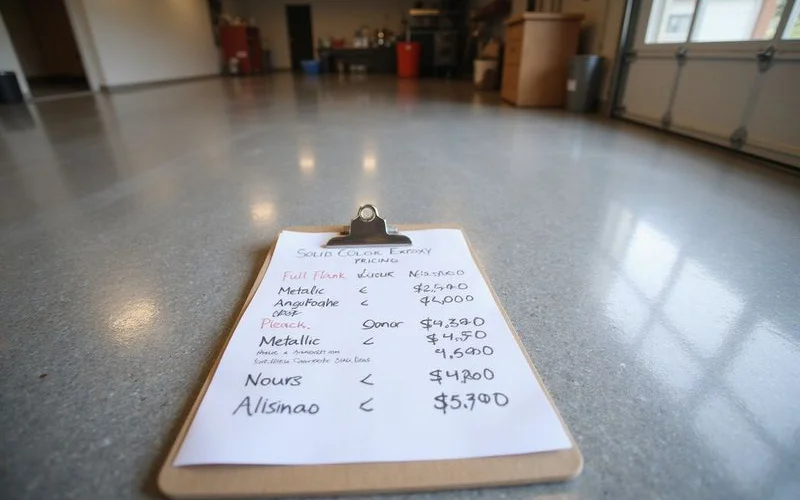
Where Each Finish Wins
We strongly recommend matching your finish directly to how you plan to use the room. Choosing between a solid color vs metallic finish, or a textured flake, comes down to daily practicality and budget. Each system excels in a very specific type of environment.
Metallic Epoxy for Maximum Impact
Our team sees metallic epoxy as the undisputed premium choice for showrooms and custom spaces. Genuine three-dimensional depth creates a marble-like effect that makes people notice the floor immediately. This finish relies on unrepeatable chemical reactions, meaning your floor will be completely unique.
We typically see metallic finishes priced between $9 and $12 per square foot across the US in 2026. This higher cost accounts for the specialized materials and the intense craft required to manipulate the pigments. Choose this finish when appearance is your absolute top priority.
Flake Epoxy for Everyday Practicality
We install more flake floors than anything else for a very good reason. A flake finish is the most popular garage floor in Jacksonville because the textured surface hides almost everything. The colored vinyl chips camouflage dust, minor scuffs, and dirt so the floor looks clean longer.
Our data shows these floors run about $8 to $12 per square foot installed. You get dozens of color blends to choose from, making it incredibly versatile. This option is simply hard to beat for an everyday working garage.
Solid Color Epoxy for Simplicity and Value
We suggest solid color epoxy if you need a clean, modern look on a strict budget. A single uniform color is the most economical finish available right now. Professional installations generally cost between $4 and $10 per square foot, making it very accessible.
Our experts note that the main trade-off is how readily a smooth, solid color shows dust and tire marks. You will likely need to clean it more often to keep it looking sharp. The smooth surface also gets very slippery when wet.
The quick recommendation
Want a showpiece? Metallic. Want the best all-around garage floor? Flake. Want clean and economical? Solid color. Most Jacksonville homeowners land on flake, and that is usually the right call.
Slip Resistance and Repairability
We know that slip resistance and repairability are the two practical points that often decide a close call. Flake coatings naturally resist slipping, while solid colors are the easiest to patch and repair. The right choice heavily depends on the amount of moisture the floor will see.
Measuring and Managing Slip Resistance
Our installers always look at the Coefficient of Friction (COF) when evaluating floor safety. A COF rating above 0.50 generally provides sufficient traction to meet safety guidelines in the US. Flake epoxy has a built-in advantage here.
We find that the natural texture of the broadcast chips grips well when wet, often hitting that 0.50 mark without extra help. Solid color and metallic floors cure to a smooth, glass-like finish that poses a slipping hazard. You must plan to add a non-slip aggregate to the topcoat if the floor will get wet.
Our crews typically mix in Aluminum Oxide or a Shark Grip additive to create texture without ruining the visual appeal. This simple step dramatically increases safety for a very low cost. The grit stays suspended in the clear coat to provide long-lasting traction.
The Reality of Spot Repairs
We find that the repairability order completely reverses when compared to slip resistance. Solid color epoxy is the easiest to spot-repair since there is no pattern to match. A technician can simply prep the damaged area and blend in the exact same color code.
Our repair teams rate flake epoxy as moderate to fix. You have to match both the base color and the exact chip blend, which takes a little trial and error. Metallic epoxy is the hardest system to patch successfully.
We caution clients that the one-of-a-kind pigment movement cannot be exactly reproduced. A repair on a metallic floor will almost always be visible. The patched area will stand out against the original swirling design.
We want you to think about how the floor will be used, not just how it looks in a photo.
The right finish usually becomes clear once you prioritize your actual needs. Take your time when deciding on a metallic vs flake epoxy floor for your next project.
Our team is glad to talk it through at the estimate and help you schedule your installation.
Questions about your floor?
Real numbers, no pressure — transparent pricing on every system.