
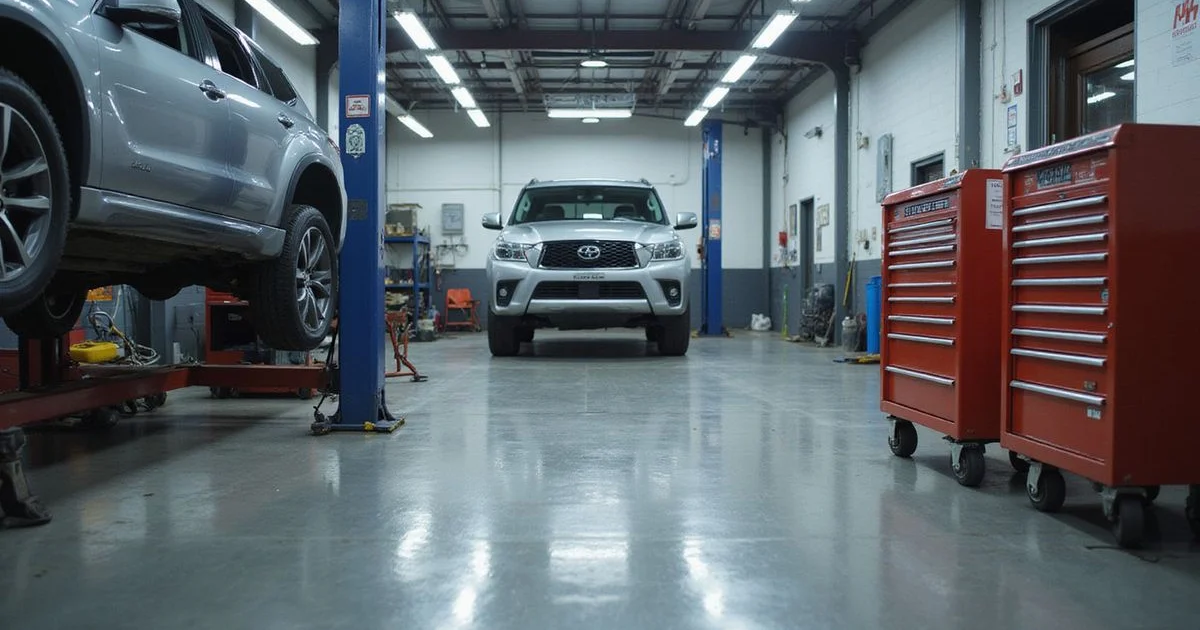
You know how quickly a simple spill can turn into an expensive flooring nightmare. Every commercial space encounters its fair share of harsh cleaners and vehicle fluids.
But treating a high-traffic industrial chemical floor like a standard storage room is a costly mistake.
We see this happen across the US constantly. A business owner invests in a standard coating, only to watch it peel away after a few months of heavy-duty exposure.
Let us look at the data behind chemical resistance, what it actually means for your daily operations, and how to choose the right system from the start.
Why Chemical Resistance Is a System Decision
Chemical resistance is not a feature you can just paint on after the fact. The decision must happen during the planning phase.
When we spec a commercial epoxy floor, identifying the exact chemicals your facility handles is our very first priority. This step directly dictates the entire coating system.
Every environment encounters basic daily exposure. A properly installed surface easily repels these common liquids:
- Standard floor cleaning detergents
- Mild organic solvents
- Accidental coffee or beverage spills
Battery acid, however, is a completely different story. Sulfuric acid used in auto batteries has a highly corrosive pH around 0.8.
If a standard resin encounters a substance that acidic, it will permanently etch and degrade the material.
The American Society for Testing and Materials uses the ASTM D1308 standard to measure how finishes react to various chemicals. This testing proves that a floor rated for mild oils will fail catastrophically under aggressive industrial solvents.
Standard Epoxy vs Chemical-Resistant Urethane
Contractors generally separate floor systems into two main tiers based on exposure levels.
A high-quality, 100% solids epoxy easily handles the routine spills of a standard commercial building. Hydraulic fluid, grease, and basic commercial cleaners wipe off cleanly without etching the topcoat.
For a standard warehouse or general retail space, this single-layer solution works perfectly.
A chemical-resistant urethane (CRU) system provides the necessary upgrade for harsh environments. Manufacturers formulate these topcoats to block aggressive solvents and industrial chemicals.
We often apply a CRU topcoat at a thickness of 3 to 5 mils over a heavier epoxy base. This thin but impenetrable barrier stops corrosive liquids from reaching the vulnerable layers beneath.
For extreme industrial environments, contractors might even specify a Novolac epoxy system. Novolac polymers have a much higher cross-link density, making them capable of withstanding 98 percent sulfuric acid spills for days at a time.
The matching rule
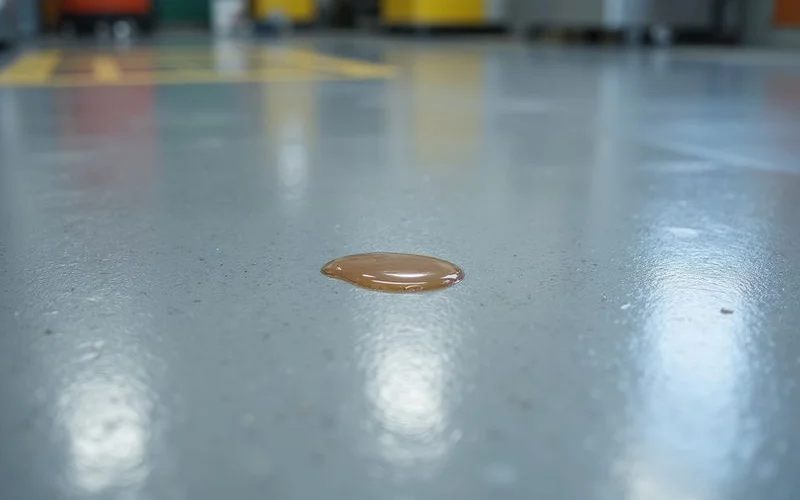
Match the system to your most aggressive chemical, not your average one. A floor speced for the everyday will fail at the one tough chemical it was not built for.
Recommended Systems by Facility
Your daily operations dictate the exact chemistry required for your concrete slab. Here is how specific chemical resistance requirements map to common commercial facilities in the US:
| Facility | Typical Exposure | Recommended System |
|---|---|---|
| Warehouse / storage | Mild dirt, occasional spills | 100% solids epoxy |
| Auto repair shop | Motor oil, brake fluid | Chemical-resistant urethane |
| Aviation hangers | Skydrol, harsh hydraulic fluids | Novolac epoxy or specialized CRU |
| Auto with battery work | Concentrated battery acid | Chemical-resistant urethane |
| Manufacturing / process | Industrial chemicals, high pH caustics | CRU, system-specific |
| Food processing | Lactic acids, hot water washdowns | Urethane cement (USDA compliant) |
Auto repair centers represent the most common chemical exposure jobs we handle locally.
Brake fluid is highly corrosive and will strip a standard, big-box store floor paint in hours. You can read our detailed guide on auto shop applications for a complete breakdown of those specific challenges.
Food service areas require a completely different approach. Facilities processing dairy or meat generate organic acids that rapidly destroy standard resins.
Urethane cement handles those harsh organic acids while meeting strict FDA and USDA health codes.
Oil and Hot-Tire Performance
Two severe performance issues plague auto shops and fleet garages. Owners constantly fight oil staining and hot tire pickup.
A high-performance oil resistant epoxy prevents motor oil from seeping into the concrete pores. The spilled fluids simply sit on the dense surface until a technician wipes them away.
The Mechanics of Hot Tire Pickup
Hot tire pickup is an entirely separate mechanical failure. During peak summer driving, vehicle tires can easily exceed 140 degrees Fahrenheit on hot US asphalt.
When those scorching tires park on a cheap, single-part floor paint, the heat softens the resin. As the tire cools and contracts, it literally grips the paint and tears it completely off the concrete.
Our team prevents this by sealing the floor with a heavy-duty, multi-part topcoat. A professional-grade system chemically bonds to the slab, resisting the intense heat and mechanical pull of commercial truck tires.
The combination of a stain-resistant barrier and superior adhesion keeps high-traffic facilities looking professional year after year.
Making the Right Choice
Protecting your concrete slab starts with an honest assessment of your daily hazards.
Tell your flooring contractor exactly what chemicals your facility handles daily.
We will engineer and install a custom chemical resistant epoxy floor system built to handle that specific abuse.
Questions about your floor?
Real numbers, no pressure — transparent pricing on every system.