
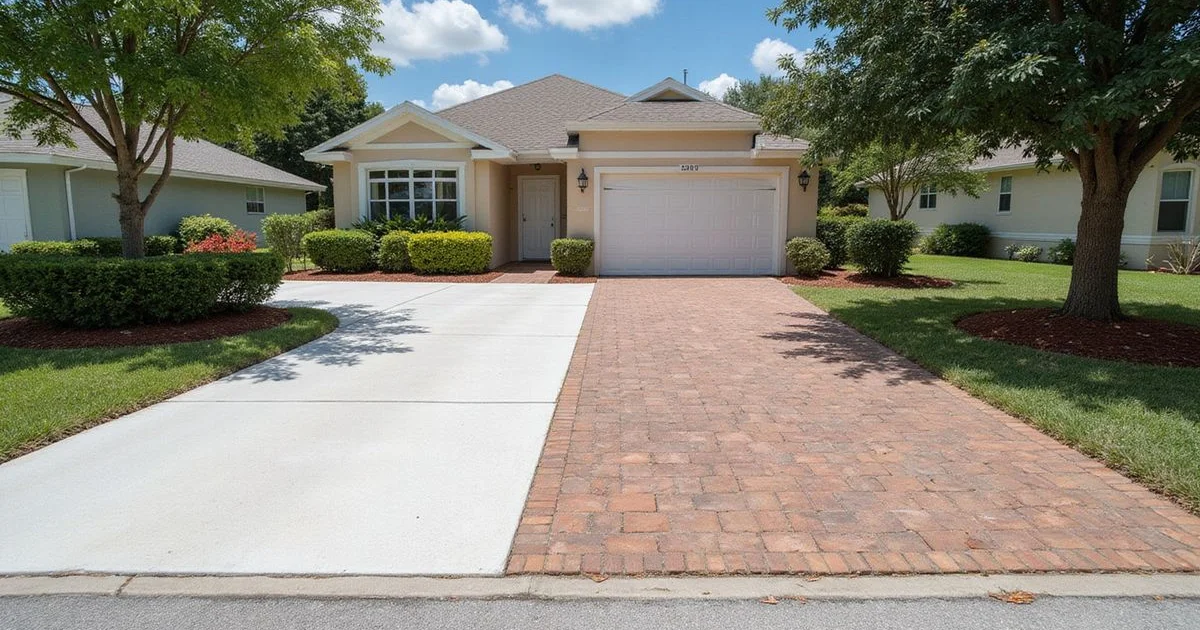
Three Ways to Refresh a Driveway
We often see perfectly good homes dragged down by worn, stained driveways. This simple eyesore instantly reduces the curb appeal of an otherwise beautiful property. The conversation usually boils down to three distinct options to fix it.
Our team has evaluated hundreds of these slabs to determine the best path forward. You can apply a basic concrete sealer, install a paver overlay, or invest in a full-thickness driveway coating. Each method offers a completely different result, lifespan, and price tag.
We will break down the latest 2026 data so you can make an informed choice.
Understanding the driveway coating vs sealer debate starts with looking at the actual performance numbers.
The right choice completely depends on your budget and your long-term goals.
What Each Option Does
We classify these three options into basic maintenance, complete replacement, and full resurfacing. A concrete sealer protects the existing slab without changing its look. A paver overlay builds a brand-new stone surface right over the old concrete.
Our preferred approach depends entirely on the current health of your pavement. Coatings bridge the gap by chemically bonding to create a durable, attractive new finish. Let’s examine how each product actually functions on your property.
The Role of Concrete Sealers
We see sealers as a purely defensive measure for your concrete. These thin liquids, usually acrylic or penetrating silane-siloxane, form a microscopic barrier against water and oil. They add no measurable thickness to the surface and cannot hide existing stains or cracks.
Our maintenance crews recommend this option if your primary goal is simply preventing freeze-thaw damage. The application process is fast and relatively inexpensive. It is strictly routine maintenance rather than a dramatic property makeover.
We advise clients to budget for regular reapplications to keep the protection active. Expect to reapply this basic barrier every two to three years as sunlight breaks it down. The thin layer simply cannot withstand decades of heavy vehicle traffic.
The Mechanics of a Paver Overlay
We consider a paver overlay to be a high-end architectural renovation. Contractors install interlocking units made of concrete, brick, or natural stone directly over a stable slab. This process creates a stunning aesthetic transformation and introduces functional joints between each individual unit.
Our masonry projects built to Interlocking Concrete Pavement Institute standards require significant labor and time. The thick units raise the driveway height, requiring physical adjustments at the garage lip and the street transition. It is a genuine structural change that delivers massive curb appeal.
The Science of Driveway Coatings
We utilize advanced resins to transform concrete without the disruption of a full demolition. Professional installers apply a thick, UV-stable liquid directly onto a mechanically ground slab. This full-thickness resurfacing completely hides the old, gray concrete under a fresh new color.
Our favorite high-performance systems provide several distinct advantages over standard latex paint.
- Chemical resistance: Polyaspartic resins repel motor oil drips, gas spills, and winter de-icing salts.
- Tire mark prevention: The rapidly cured surface resists the hot tire pickup that frequently ruins cheap acrylics.
We often have installers broadcast decorative vinyl flakes to increase slip resistance and mimic premium granite. The deep chemical bond prevents peeling and easily handles heavy daily vehicular traffic. A cured resin surface acts as both a striking cosmetic upgrade and a heavy-duty protective shield.
Our team highly recommends reviewing long-term wear comparisons before making a decision.
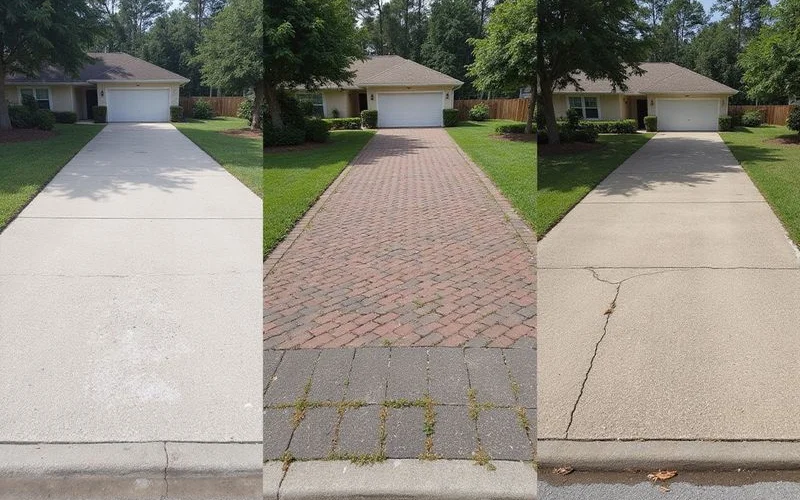
The visual differences between a fading sealant and a UV-stable resin become obvious after just a few hot summers. Real-world testing proves the superior wear resistance of these modern industrial materials.
The Comparison: Driveway Coating vs Sealer and Pavers
We compare these finishes by looking at upfront expenses, expected longevity, and ongoing upkeep requirements. Sealers cost the least but demand constant reapplication. Pavers require the highest initial investment, while driveway resurfacing options sit comfortably in the middle.
| Factor | Concrete Sealer | Paver Overlay | Driveway Coating |
|---|---|---|---|
| Appearance change | Minimal (slight gloss) | Major (new texture/shape) | Major (custom colors/flakes) |
| 2026 Average Cost (US) | $0.15 to $0.35 per sq. ft. | $10.00 to $25.00+ per sq. ft. | $3.00 to $8.00 per sq. ft. |
| Expected Lifespan | 2 to 5 years | 25 to 50 years | 10 to 15+ years |
| Decorative options | None (clear or tinted) | High (patterns and borders) | High (scored designs, colors) |
| Installation Time | 1 to 2 days | 5 to 10 days | 2 to 3 days |
| Maintenance | Frequent reapplication | Joint sand and weed upkeep | Simple pressure wash rinse |
| Best use case | Protecting a sound slab | Full premium property redo | Transforming a tired slab |
Our recent market analysis highlights a clear middle ground for most residential and commercial properties. The 2026 pricing data shows a massive financial gap between temporary liquids and heavy masonry. A smart investment balances the initial hit to your wallet with the long-term value added to the home.
The value sweet spot
We consider a resin coating to be the perfect middle ground between a thin sealer and a heavy paver overlay. It offers far more transformation and durability than a sealer, at a fraction of the cost and disruption of pavers. For most tired Jacksonville driveways, and similar slabs across the US, it is the clear value choice.
When Each One Is Right
We evaluate your specific budget, aesthetic goals, and the current condition of the concrete to make a final recommendation. A tight budget naturally points to a basic sealer. A desire for extreme luxury points to pavers, and a need for a durable, clean transformation points to a coating.
Our site inspectors always check the structural health of your existing slab before quoting a price. Severe, deep settling or wide structural cracks will limit your choices and might mandate a full tear-out. Assuming the concrete base is relatively sound, you can confidently proceed with one of these three paths.
Choosing a Concrete Sealer
We recommend a simple acrylic or penetrating sealant when the driveway genuinely just needs basic weather protection. The surface must already look acceptable to the eye. The clear liquid will not hide any ugly oil stains, tire marks, or mismatched patchwork.
Our clients usually pick this route when the budget is very tight and the goal is just preventing winter freeze-thaw damage. You must accept that this is a short-lived solution requiring frequent professional reapplications. Expect to pay a local contractor again in two years to maintain the barrier.
Investing in a Paver Overlay
We suggest a stone paver overlay when you want a premium, highly distinctive architectural aesthetic. The project budget must support a significant financial investment. High-end natural stone or brick installations often exceed $15,000 for a standard two-car space in the current US market.
Our installation crews have to account for raising the driveway height, which can complicate water drainage near the garage doors. This route brings undeniable beauty, but it also introduces the need for regular joint-sand maintenance and weed control. The individual stones will flex with the ground, making them highly resistant to the visible surface cracking that plagues solid slabs.
Upgrading With a Driveway Coating
We specify a polyaspartic or epoxy coating when you want a real, immediate visual transformation. This process delivers fresh color, a fully protected slab, and optional decorative scoring without the massive disruption of heavy construction. It requires a driveway that is structurally sound and free of massive heaving.
Our local installers find this to be the smart middle path for the majority of property owners refreshing a worn-but-solid concrete slab. A modern resin system costs significantly less than stone while outlasting cheap sealants by a full decade. A free on-site assessment confirms which specific resurfacing product fits your slab and your personal goals.
We strongly encourage gathering multiple quotes to truly understand the driveway coating vs sealer cost differences in your local area. Comparing these driveway resurfacing options side-by-side reveals the best long-term value for your property. Contact a certified concrete contractor today to schedule a formal evaluation and secure your spot on their seasonal schedule.
Questions about your floor?
Real numbers, no pressure — transparent pricing on every system.