
Three Ways to Refinish a Pool Deck
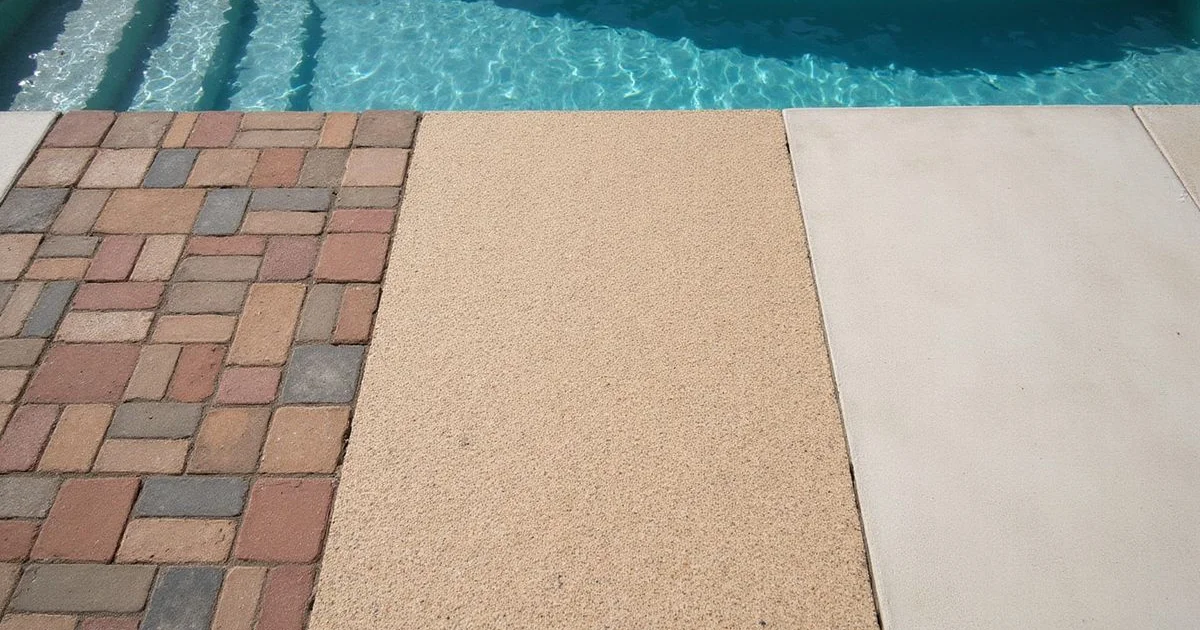
If your pool deck is tired, you have three common refinishing routes: an epoxy pool deck coating, concrete stain, or paver sealing.
We constantly talk to property owners in the US trying to choose between these specific systems. A cheap pool deck epoxy vs concrete stain comparison often misses the hidden costs of maintenance.
You need to know the facts before investing your money.
Our team created this guide to give you a transparent look at the durability and costs. A pool deck coating offers the most complete protection, but it is not always the right choice.
Let’s look at the data so you can make the best decision for your backyard.
What Each Option Actually Does
Concrete stain colors your existing slab, paver sealers lock sand joints together, and pool deck epoxy builds a completely new protective surface. We see many homeowners confuse these cosmetic updates with structural protection.
The Basics of Concrete Stain
Acid stains contain hydrochloric acid that reacts with minerals, while water-based acrylic stains sit on top of the pores. They are purely cosmetic.
Our experts note that stains offer absolutely zero added slip resistance or texture. A wet deck around the pool requires a Dynamic Coefficient of Friction rating of at least 0.6 to be safe. Stain won’t help you reach that target safety rating.
How Paver Sealers Work
Paver sealer is designed exclusively for paver decks. We apply sealers to enhance the color of the stones and harden the joint sand.
This prevents weed growth and adds basic stain resistance. The sealer works with the existing jointed paver surface rather than creating a continuous barrier.
The Mechanics of Pool Deck Coatings
Our preferred method for maximum longevity is an epoxy or polyaspartic coating system. A pool deck epoxy resurfaces the slab with a built-up layer. This UV-stable system seals the concrete underneath against chlorine and salt damage.
We mix aluminum oxide or silica sand directly into the topcoat for maximum grip. The textured surface ensures compliance with ASTM C1028 safety standards for slip resistance. You get a continuous surface that stops moisture from penetrating the concrete slab.
The Comparison: Pool Deck Epoxy vs Concrete Stain
Comparing these options requires looking closely at upfront pricing and long-term value. We compiled data from 2026 US market averages to give you a clear baseline.
Cost is often the first thing people ask about, and the numbers show a significant difference. You must weigh the initial price tag against the expected lifespan.
Our cost analysis reveals that concrete stain runs between $2 to $4 per square foot. Paver sealing generally costs $1.50 to $3 per square foot. A professional pool deck epoxy or polyaspartic coating ranges from $6 to $12 per square foot.
Review the table below to compare the specific features of each system side by side.
| Factor | Concrete stain | Paver sealer | Pool deck epoxy / polyaspartic |
|---|---|---|---|
| US Cost (2026) | $2 to $4 / sq ft | $1.50 to $3 / sq ft | $6 to $12 / sq ft |
| Expected Lifespan | 1 to 3 years | 2 to 4 years | 10 to 15+ years |
| Appearance | Color only | Enhanced pavers | Custom color, design, finish |
| Slip resistance | None added | Limited, can be slick | High (added aluminum oxide) |
| Chlorine tolerance | Limited | Moderate | High (aliphatic system) |
| Maintenance | Frequent reapplication | Regular resealing | Simple rinse |
The slip-resistance gap
Only a coating builds slip resistance into the deck. For a surface that is wet all summer, that is a major safety difference. Without texture additives, sealers and stains become dangerously slick under bare feet.
Upfront Price Versus Long-Term Value
Our installers constantly replace failed, cheap coatings that couldn’t survive winter freeze-thaw cycles. Concrete stain is the cheapest initial option, but it requires resealing every single year to prevent fading.
Over a decade, you will pay for that stain application three or four times. A polyaspartic coating costs more on day one, but it lasts up to 15 years without cracking. This makes the true lifetime cost of a high-quality coating much lower.
When Each One Is Appropriate
Your choice depends entirely on the condition of your concrete and your budget. We recommend a full coating for high-traffic pools, while stain works for quick cosmetic fixes.
Picking the wrong product guarantees peeling and wasted money. You must evaluate your long-term plans before making a final call.
Choosing Concrete Stain
Our team suggests concrete stain for decks that are structurally flawless. It makes sense for a property on a tight budget where slip resistance is not a primary concern.
You must be prepared to reapply the sealer frequently to maintain the color. It is the least durable option available.
Selecting Paver Sealer
Paver sealer is the right call when you already have an interlocking paver deck. We use this product to protect the stones without altering the actual surface type.
The sealer stabilizes the sand to keep ants and weeds out.
Investing in a Pool Deck Coating
A pool deck coating is the best fit when you want a genuine, long-lasting transformation. Our polyaspartic and epoxy systems provide built-in slip resistance and real UV tolerance.
You get a sealed slab that shrugs off harsh pool chemicals. The main benefits include:
- Chemical Defense: Complete protection against chlorine and saltwater.
- Temperature Flexibility: Shifts with winter freeze-thaw cycles without cracking.
- Customization: Endless color and texture combinations to match your exterior.
For a poured concrete deck that gets real use, it is the only option that offers permanent protection.
The honest summary is straightforward:
- Concrete stain is the cheapest and shortest-lived.
- Paver sealing is highly specific to stone joints.
- A coating is a durable, slip-rated transformation.
We always tell clients that safety and longevity matter most. A pool deck epoxy vs concrete stain comparison proves that high-quality coatings save you money over time.
Tell us about your current deck layout and our crew will point you to the right solution.
Questions about your floor?
Real numbers, no pressure — transparent pricing on every system.