
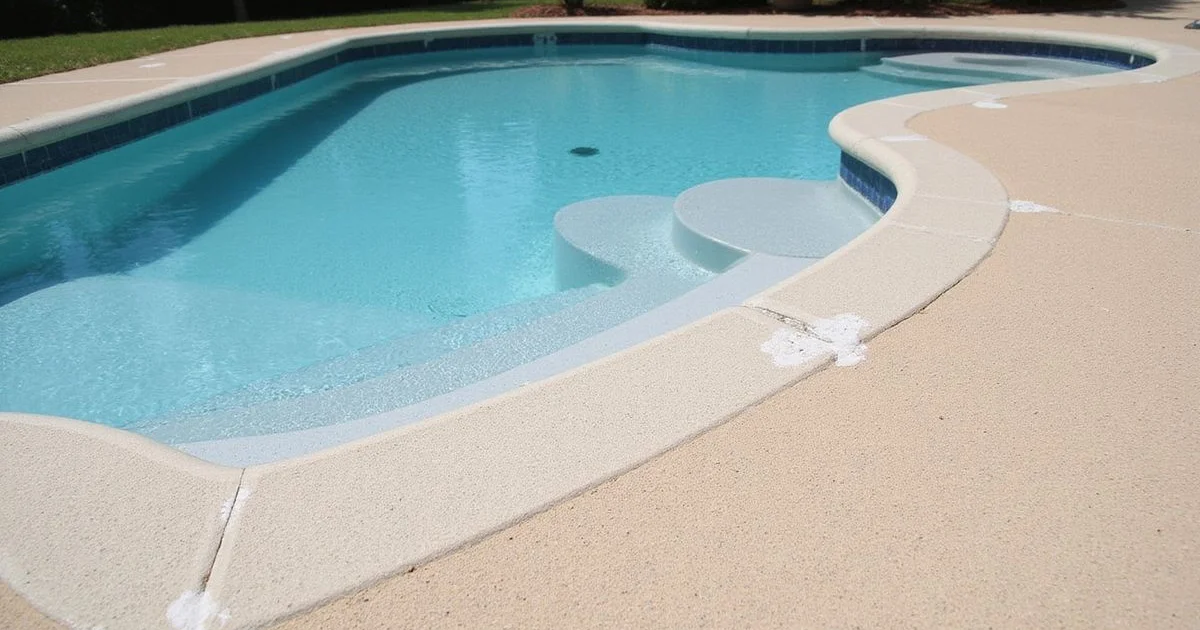
Two Popular Florida Pool Decks
We often see homeowners trying to decide between pool deck epoxy vs kool deck for their outdoor renovations. The choice usually comes down to comparing a modern polyaspartic pool deck coating against a traditional Kool Deck finish.
This comparison will break down the real differences in heat reduction, durability, and long-term value.
Our team wants to give you an honest look at both options. Let’s look at the actual data to help you make the best choice for your backyard.
The Head-to-Head Comparison
The main difference is that a polyaspartic floor costs more upfront but lasts up to 20 years, while a Kool Deck is cheaper but needs patching around year ten. We created this breakdown based on current 2026 material costs and performance metrics. The table below highlights exactly how these two surfaces stack up.
| Factor | Polyaspartic Coating | Kool Deck |
|---|---|---|
| Heat reduction | Drops surface temp by up to 15 degrees | Drops surface temp by 20 to 30 degrees |
| Lifespan | 15 to 20 years | 10 years before patching |
| Slip resistance | Tunable aggregate broadcast | Built-in knockdown texture |
| Repairability | Recoating restores it completely | Patching leaves visible marks |
| Color options | Wide range with custom chip blends | Limited pastel palette |
| UV Resistance | 100% UV stable (no yellowing) | Fades under direct sunlight |
| Cost | $7 to $12 per square foot | $3 to $8 per square foot |
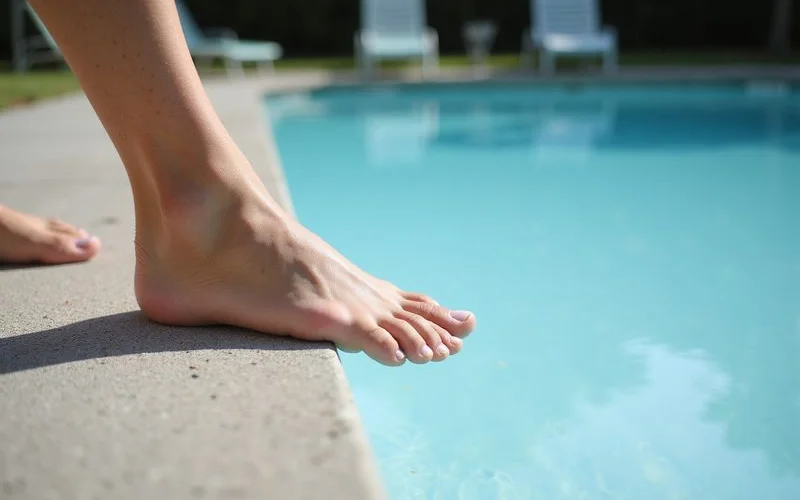
Heat: The Reason Both Exist
Heat reduction is the primary reason Kool Deck became famous. Our data shows that an authentic Kool Deck surface can run 20 to 30 degrees cooler than bare concrete during peak summer heat. This cementitious product was invented by Mortex in 1962 specifically to combat scorching temperatures.
That massive temperature drop is why so many older pool decks feature the classic Mortex finish. We also test modern polyaspartic systems against these same high temperatures. A cool-color coating bounces UV rays away from the slab to protect bare feet.
These reflective additives achieve a similar cooling effect to traditional cement finishes. Our preferred light-toned polyaspartic floors remain very comfortable on a 95-degree day.
| Surface Type | Temperature Performance on a 95°F Day |
|---|---|
| Bare Concrete | Can easily reach 130 degrees in direct sunlight |
| Authentic Kool Deck | Lowers surface temperature by up to 30 degrees |
| Polyaspartic (Cool Colors) | Uses reflective technology to remain comfortable underfoot |
Color choice is the most important factor for either material. Dark finishes will absorb heat regardless of the product you choose. We always warn clients that a dark Kool Deck or a dark coating will still get hot.
Durability and Repairability
Long-term durability reveals the biggest gap between these two materials. Our repair teams constantly replace cementitious finishes that have cracked from shifting ground and seasonal temperature changes.
A polyaspartic coating is four times stronger than a standard epoxy and offers 98 percent more flexibility. Kool Deck usually lasts about ten years before it requires serious patching.
We document three common issues when maintaining these older surfaces:
- Matching the exact color of faded concrete is almost impossible.
- Duplicating the original knockdown texture rarely works.
- Patching leaves the pool area looking like a checkerboard.
A modern polyaspartic installation avoids these problems entirely because it ages gracefully over a 15 to 20 year lifespan. This advanced material is 100 percent UV stable, meaning it will never yellow or fade in the sun.
Our process simply involves applying a fresh topcoat when a polyaspartic floor eventually shows wear. The surface recoats cleanly instead of requiring messy concrete patches.
The long-view difference
Kool Deck costs less to install but tends to need patching sooner, and patches show. A polyaspartic coating costs more upfront but ages gracefully and recoats cleanly. Over a decade, the gap narrows.
Which to Choose
The debate of kool deck vs epoxy or polyaspartic truly comes down to immediate savings versus long-term value. We recommend basing your final decision on these two clear paths:
- Choose Kool Deck if your initial budget is tight and you accept the reality of future repairs. This classic cement surface costs around $3 to $8 per square foot to install and handles heat beautifully.
- Choose a polyaspartic coating if you want maximum durability, tunable slip resistance, and zero yellowing. The higher upfront cost of $7 to $12 per square foot pays for itself because you avoid constant patching.
This strong finish is the better long-term value for most homeowners. Our crews can often prep and coat directly over your existing deck instead of tearing it out.
Contact us today to schedule a free site evaluation and find the perfect fit for your pool.
Questions about your floor?
Real numbers, no pressure — transparent pricing on every system.