
Two Ways to Prepare Concrete: Shot Blasting vs Diamond Grinding
We see beautiful floor coatings fail far too often because of poor surface preparation. When evaluating shot blasting vs diamond grinding, both approaches do the same fundamental job of mechanically preparing a slab so a coating can bond securely. These two professional concrete prep methods are not direct competitors.
Our approach to scoping prep services involves choosing carefully between them. The right choice depends entirely on the condition of the floor and the specific texture the new coating requires.
Let us review the real-world differences, the costs, and exactly how to choose the right approach for your US facility.
How Each Method Works
We utilize specialized heavy machinery to strip away the top layer of concrete and expose a clean, porous surface. Diamond grinding uses rotating abrasive pads to smooth the floor, while shot blasting fires steel beads to chip away the concrete. Understanding the mechanics helps clarify why one is better for a specific space.
The Diamond Grinding Process
Our grinding teams typically operate large planetary grinders, like the Husqvarna machinery, equipped with rotating diamond-segment heads. These machines cut into the surface of the concrete with incredible precision. The process removes contamination, levels minor high spots, and opens the slab to a controlled, relatively fine texture.
Dust management is a major factor on these jobs. We attach industrial HEPA vacuums directly to the grinders to capture particulate matter. This integrated dust collection is essential for meeting the strict OSHA silica regulations (29 CFR 1926.1153) across the United States.
The Shot Blasting Process
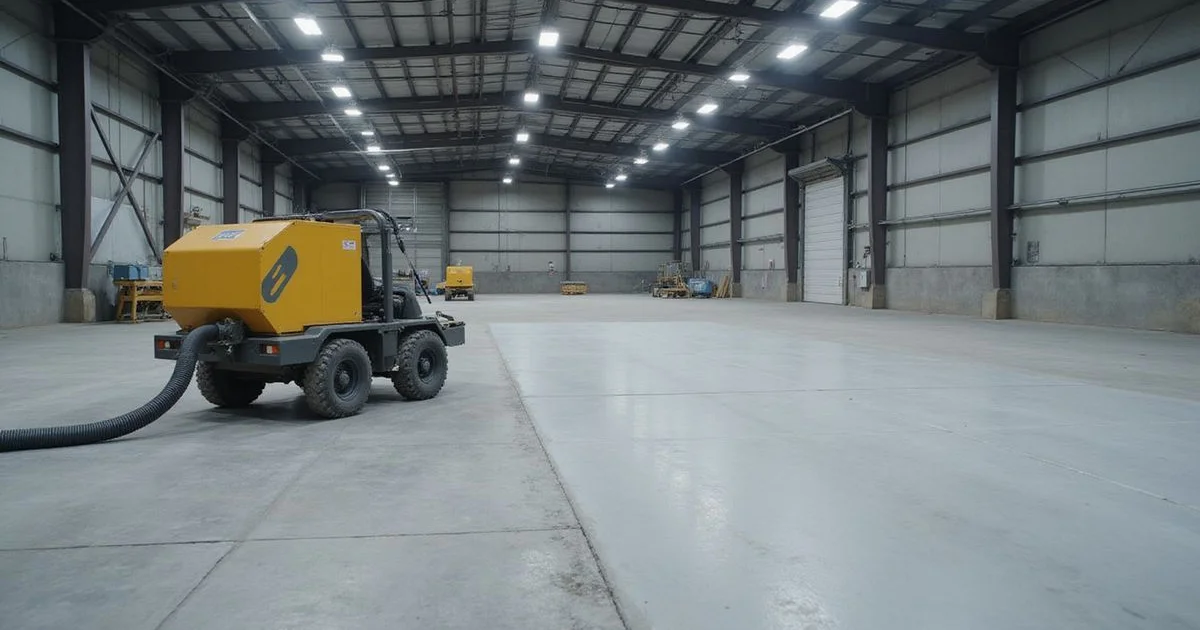
Shot blasting works differently than a grinding machine. A specialized unit, such as a Walk-behind Blastrac, propels small steel shot at high speed against the concrete. The impact chips away the surface, producing a coarser, more aggressive texture.
The machine then instantly recovers the steel shot for reuse. Our crews favor this method for its incredible speed over large open areas. The entirely enclosed blast chamber also makes it a highly efficient way to contain concrete dust.
The CSP Profile Each One Produces
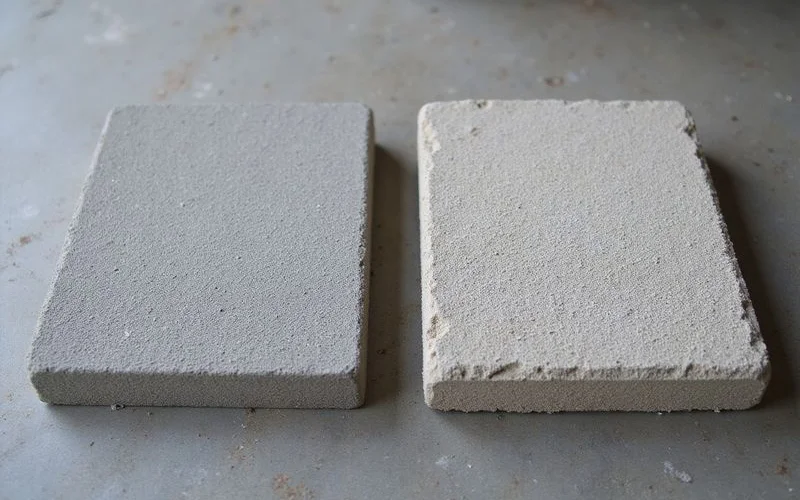
The clearest way to evaluate these tools is by performing a direct csp profile comparison. CSP is the standardized roughness scale developed by the International Concrete Repair Institute (ICRI), and different coating systems require different profiles. We always match the preparation method to the exact CSP rating demanded by the flooring manufacturer.
| Method | Typical CSP Profile | Ideal Coating Thickness | Best Used For |
|---|---|---|---|
| Diamond Grinding | CSP 1-3 | Thin mil (under 10 mils) | Residential, smooth finishes, clear sealers |
| Shot Blasting | CSP 3-5 | High-build (over 15 mils) | Industrial, thick epoxy, urethane cement |
Diamond grinding produces a finer profile and can leave a smoother surface. This finish is ideal for residential epoxy and any system that calls for a CSP 1 to 3. You will avoid the visible scratch marks that heavier methods leave behind. Our specialists recommend grinding whenever a thin, decorative coating is being applied.
Shot blasting produces a coarser, more aggressive profile. This texture is required for the thick, high-build industrial systems that need a CSP 3 to 5 to key into securely. The heavy impact can sometimes leave overlapping blast lines, commonly called tram lines, which will show through thin coatings. We reserve this aggressive approach for thick systems that will easily cover those physical imperfections.
The professional rule of thumb
Residential floor or smooth finish requires diamond grinding. A large industrial floor needing a coarse profile requires shot blasting. Always match the prep to the profile the coating system specifies.
Surface, Speed, and Cost
A few practical differences round out the comparison when budgeting for a commercial or residential project in 2026. We evaluate surface results, production rates, and average US pricing to determine the most cost-effective path. Both methods have clear financial and logistical advantages depending on the specific environment.
Comparing Production Rates and Results
The physical outcome and the speed of the machinery differ significantly.
- Surface result: Grinding can leave a smoother, more refined surface. Shot blasting leaves a coarser texture with potential blast lines.
- Speed on open areas: Shot blasting is incredibly fast across large, open industrial floors. A commercial shot blaster can easily prepare 1,500 to 3,000 square feet per hour.
- Methodical pacing: Grinding requires a more deliberate pace. A standard planetary grinder typically covers 500 to 1,000 square feet per hour.
- Edges and detail: Diamond grinding reaches edges, corners, and tight areas a shot blaster simply cannot touch. Our teams almost always use hand grinders for edge work on commercial jobs, even when the main floor is shot-blasted.
Average US Costs in 2026
Pricing tracks closely with the floor size and the chosen method.
- Shot blasting efficiency: Shot blasting is highly efficient on big open floors, keeping labor costs low. Average US pricing ranges from $1.00 to $2.50 per square foot for spaces over 10,000 square feet.
- Grinding precision: Grinding is the standard for residential applications and detail work. The slower production rate means costs typically range from $1.50 to $5.00 per square foot.
The honest takeaway is that evaluating shot blasting vs diamond grinding is a practical matching exercise. The preparation method must strictly follow the specifications of the coating system and the floor type.
Our estimating team will gladly review your facility and recommend the exact process your new floor requires. Contact us today to schedule a site visit and start planning your installation.
Questions about your floor?
Real numbers, no pressure — transparent pricing on every system.