
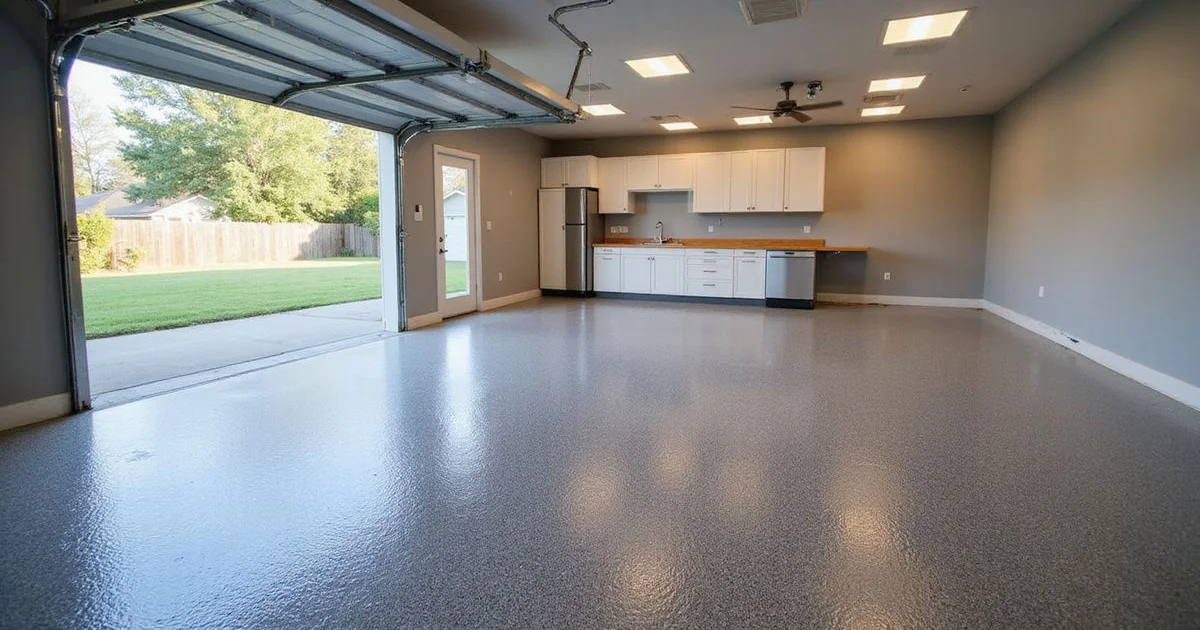
Our team sees countless ruined concrete surfaces, and the root cause is almost always a misunderstanding of proper protection.
When people ask what is epoxy garage floor coating, the most accurate answer is a multi-layered chemical resin system that bonds structurally to the slab.
This industrial-grade barrier stops oil stains, prevents concrete dusting, and resists heavy impacts. We are going to walk through the exact components of a professional application, examine the real costs, and help you select the best finish.
What Is Epoxy Garage Floor Coating? A System, Not a Coat of Paint
An epoxy garage floor is not a single liquid product, but rather a structurally bonded, multi-layered chemical system designed to protect concrete permanently. Our technicians build these floors using four specific components, ensuring each layer performs a distinct job to prevent peeling and damage.
The failure rate for single-can products is incredibly high. You will often see cheap, $200 DIY kits peel within one to five years because they lack the necessary chemical build. We frequently replace these failed coatings, which lack both proper preparation and a true protective topcoat.
According to 2026 industry cost analyses, a professional multi-layer system requires a $5 to $12 per square foot investment. This upfront cost pays off over time. Our garage floor epoxy service delivers a surface that lasts 15 to 25 years in demanding Jacksonville climates. Skipping just one step guarantees the floor will fail early.
The Four Layers, Explained
A professional epoxy setup requires four non-negotiable stages, consisting of mechanical preparation, a base coat, a decorative finish, and a resilient topcoat. We execute every single phase with precision to ensure the final product bonds permanently to your concrete.
Here is the true anatomy of a professional epoxy garage explained from the ground up:
- Surface Preparation (The Foundation): Before any resin touches the ground, the concrete must be opened using heavy-duty diamond grinding. Our crews use planetary grinders to achieve a Concrete Surface Profile of CSP 2 or 3, which is the International Concrete Repair Institute standard for adhesion. This texture feels like coarse sandpaper, giving the liquid resin a physical structure to grip. You should avoid acid etching entirely, as it fails to penetrate hard-troweled concrete or slabs previously treated with sealers.
- The Epoxy Base Coat and Primer: A 100% solids epoxy base coat is rolled onto the freshly profiled slab. Our application leaves no evaporating solvents behind, meaning the entire product cures into a thick, rock-hard layer. Moisture vapor transmission ruins floors, so we always test for hydraulic pressure first. Applying a 16-mil moisture barrier primer on damp Jacksonville slabs prevents future bubbling.
- The Decorative Finish: This layer determines the visual appeal of your space. Our clients typically choose from a full vinyl flake broadcast, a partial flake, a solid color, or a custom metallic effect. The chosen material is broadcast directly into the wet base coat to lock it in place.
- The Protective Topcoat: A clear topcoat seals the entire system against daily abuse. We normally apply a UV-stable polyaspartic layer because it prevents the yellowing effect seen in older epoxy types. This final shield provides the critical resistance against hot tire pickup, dropped tools, and the intense Florida sun.
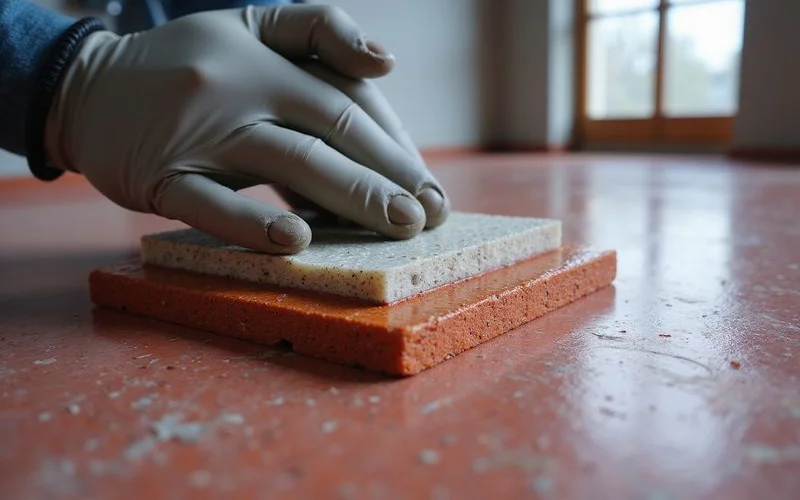
Why the layers matter
A box-store kit is usually just a thin base coat with no real prep and no true topcoat. A professional system is all four layers. That is the difference between a floor that lasts two years and one that lasts twenty.
How It Differs From Paint and Stain
Paint and stain simply dry on top of the concrete, whereas a true epoxy system utilizes a reactive thermosetting resin that chemically fuses with the slab. We explain this difference daily because homeowners often confuse temporary cosmetic fixes with permanent structural protection.
Garage floor paint and stains fail quickly because they offer:
- Zero structural thickness: Paint typically measures only 2 to 3 mils thick, while our multi-layer epoxy installations measure up to 40 mils.
- No chemical resistance: Concrete stains leave the slab completely vulnerable to road salts, chemical spills, and moisture damage.
- High vulnerability to heat: Summer asphalt heats your car tires, causing cheap paint to soften and rip right off the concrete.
We highly recommend a bonded resin system for active spaces where vehicles are parked regularly. A thermosetting resin system resists extreme heat transfer and impacts entirely.
| Feature | Standard Paint | Concrete Stain | Professional Epoxy System |
|---|---|---|---|
| Thickness | 2-3 mils | None added | 20-40 mils |
| Preparation | Minimal washing | Light cleaning | Diamond grinding (CSP 2-3) |
| Hot Tire Resistance | No, peels easily | No protection | Yes, completely resistant |
| Typical Lifespan | 1-3 years | Cosmetic color only | 15-25 years |
Choosing a Type
Choosing among different garage floor coating types depends primarily on your preferred decorative finish and the specific topcoat chemistry required for your environment. We help property owners evaluate these options to find the perfect balance of budget, visual appeal, and long-term durability.
The most popular choices in Jacksonville include:
- Full Vinyl Flake: This heavy texture provides excellent slip resistance and does an incredible job of hiding everyday dust and dirt.
- Solid Color: A plain finish serves as the most economical route for clean, simple spaces.
- Metallic Pigments: These customized swirls offer a high-end, three-dimensional decorative appearance.
Beyond the aesthetics, you must choose the chemical makeup of your topcoat. Our top recommendation for Florida garages is a polyaspartic clear coat. Polyaspartic technology cures completely in just 24 hours, compared to the three to five days required for standard epoxy. It also features 100% UV stability, preventing the ambering and yellowing effect that ruins older floors exposed to direct sunlight.
The premium performance of polyaspartic does increase the initial price. As of 2026, polyaspartic installations run between $7 and $12 per square foot, while traditional epoxy averages $4 to $7. We strongly advise reading our detailed guide on epoxy vs polyaspartic before finalizing your project details.
No matter which aesthetic or topcoat chemistry you select, the structural foundation remains identical.
Our team knows that answering what is epoxy garage floor coating comes down to understanding this permanent bond.
You are making a long-term investment in your property. Contact us today to schedule a free site evaluation, and get your concrete protected the right way.
Questions about your floor?
Real numbers, no pressure — transparent pricing on every system.