
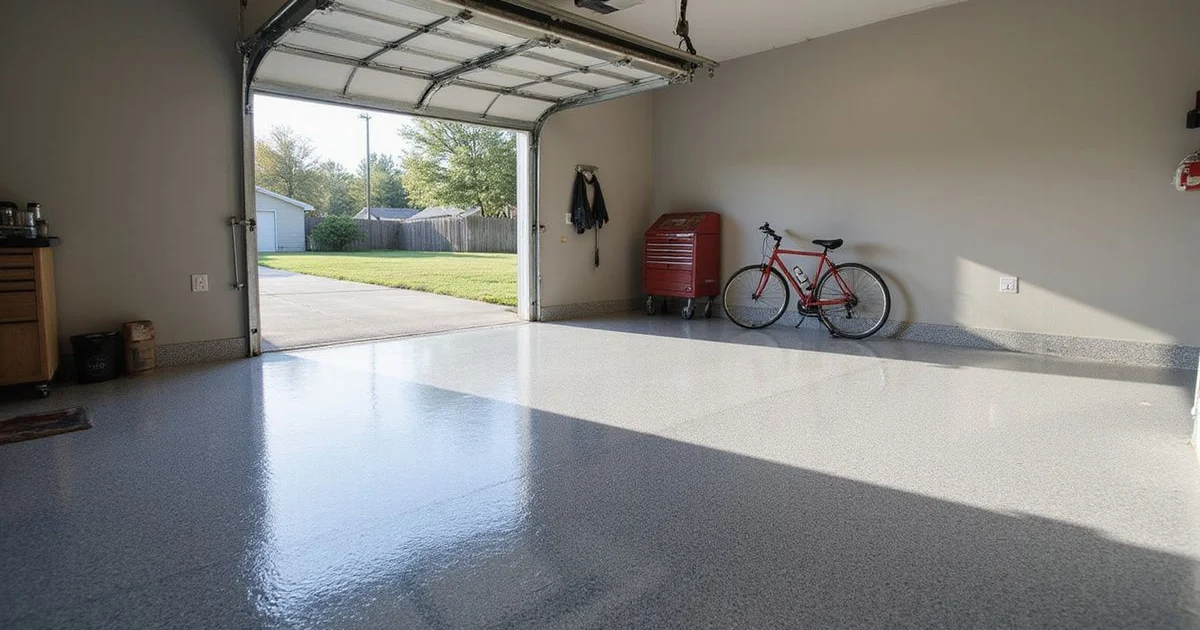
We see it all the time: a property owner frustrated by the massive downtime required for a standard floor installation. Waiting nearly a week for an epoxy base to dry is simply not practical for most active homes or businesses.
Modern chemistry provides a much better answer through polyaspartic systems, which have quickly become the preferred standard for durable US floors.
Our team will explain exactly what polyaspartic floor coating is. This guide gets polyaspartic explained clearly, covering why the chemistry works and how you can use it effectively to protect your investment.
What Is Polyaspartic Floor Coating? A Coating Defined by Speed
Polyaspartic floor coating is a rapid-curing, highly durable topcoat that can handle foot traffic in just a few hours. Standard epoxy floors need up to 72 hours to dry. This advanced material gets your space back in action the very same day.
We constantly field questions from clients who cannot afford to give up their commercial space or home garage for an entire week. That fast turnaround is the primary reason this application is so popular.
Recent 2026 application data reveals just how fast these systems perform:
- Foot traffic readiness: Safe to walk on in just 2 to 3 hours.
- Vehicle traffic readiness: Ready for cars and heavy equipment in 24 hours.
- Cure rate comparison: Cures up to six times faster than traditional floor epoxies.
- Business impact: Allows commercial facilities to complete renovations over a single weekend.
Our installation experts always warn property owners about one critical detail during this fast process. You must prepare the concrete surface properly because the quick-drying nature leaves very little room for error. Working with a professional ensures the rapid-cure timeline actually works in your favor.
The Chemistry, in Plain Terms
Polyaspartic is technically an aliphatic polyurea coating, which means it is a UV-stable and highly flexible synthetic resin. Two words in that scientific phrase carry the most important information for your project.
We break these terms down to help our clients understand exactly what they are buying.
Aliphatic Resistance
The word aliphatic means the molecular structure actively resists ultraviolet light. These specific coatings do not photo-degrade or turn yellow in the sun the way older aromatic formulas do.
Our crews highly recommend this material for garages with open doors, sunny pool decks, and outdoor driveways. Standardized ASTM testing metrics show these aliphatic systems remain crystal clear even after years of direct sunlight exposure.
Polyurea Strength
Polyurea places this product in a tough, chemical-resistant class of materials. Polyaspartic is essentially a modified version of polyurea engineered for a more controllable application.
We love how this chemistry creates a surface that is up to 98 percent more flexible than standard epoxy. That intense flexibility is exactly what prevents the floor from cracking under heavy vehicle weight or temperature shifts.
The Fast-Cure Mechanism
When the two components of a polyaspartic coating mix together, they react and crosslink into a hard film almost immediately. That rapid chemical reaction is the exact definition of a fast-cure mechanism.
We can actually tune this speed by adjusting the formulation. Installers get more working time on a massive warehouse or a quicker set on a small patio. This adaptability is a major advantage for installations across the US.
The environmental versatility of this chemical reaction provides several distinct benefits:
- Wide temperature range: Installers can apply the coating in extreme conditions, from minus 30 degrees up to 140 degrees Fahrenheit.
- Low emissions: Premium formulas boast VOC (Volatile Organic Compound) levels below 50 grams per liter.
- Safer air quality: The low VOC output makes it a much healthier option for indoor residential spaces.
- Moisture tolerance: The unique chemistry utilizes ambient humidity to help accelerate the curing process safely.
Why Florida likes polyaspartic
Fast cure means less downtime. Aliphatic chemistry means no yellowing in the sun. A wide install window means it goes down reliably in summer humidity. All three matter here.
Our technicians always monitor the concrete substrate temperature carefully before pouring. Applying the material to a cold concrete slab without proper testing can sometimes cause uneven curing. A calibrated thermometer is the best tool for ensuring a flawless finish.
How It Differs From Epoxy and Polyurethane
Polyaspartic serves as a premium, UV-stable topcoat that dries in hours. Epoxy acts as a much slower-drying base coat.
When comparing polyaspartic vs polyurethane, you will see a clear distinction. Polyurethane sits in the middle as a traditional topcoat with moderate curing times and varying UV stability.
We often build hybrid floor systems that combine the best traits of these different chemicals. Epoxy provides a highly economical, strong base layer for the concrete.
| Feature | Epoxy | Polyurethane | Polyaspartic |
|---|---|---|---|
| Cure speed | 24 to 72 hours | Moderate | 2 to 6 hours |
| UV stability | Poor (aromatic, yellows) | Varies | Excellent (aliphatic, clear) |
| Lifespan | 5 to 10 years | 10 to 15 years | 20+ years |
| Typical role | Base coat | Topcoat | Topcoat / full system |
| Install window | Narrow (fails below 50°F) | Moderate | Wide (-30°F to 140°F) |
The Hybrid Floor Approach
Our guide on epoxy vs polyaspartic walks through exactly when to use each material. A hybrid system is usually the smartest answer for a typical US home.
Industry data from 2026 shows impressive strength metrics. Polyaspartic topcoats are up to four times stronger and ten times more abrasion-resistant than standard epoxy finishes. You get a superior return on investment because the floor requires far less maintenance over its 20-year lifespan.
We hope this breakdown clarifies the unique advantages of this advanced flooring technology. Evaluate your specific climate conditions and daily traffic needs before making a final decision.
If you are still wondering exactly what is polyaspartic floor coating, professional guidance helps. We suggest contacting a local flooring expert today to evaluate your specific layout.
Questions about your floor?
Real numbers, no pressure — transparent pricing on every system.