
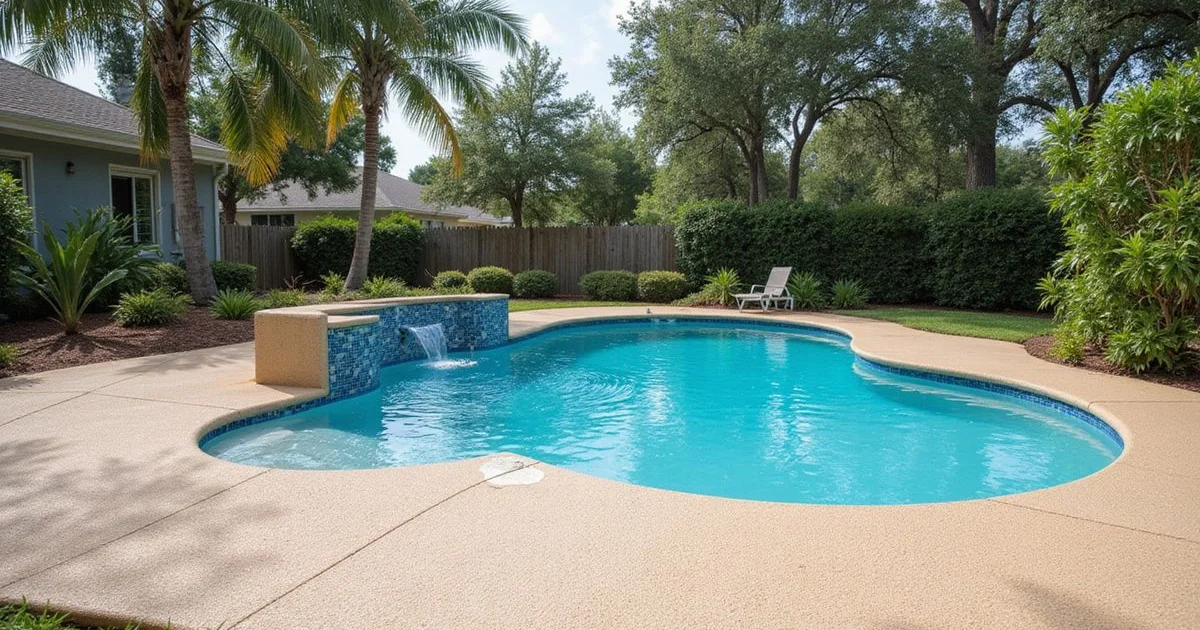
You have probably noticed that most outdoor concrete finishes start peeling or fading after just a couple of brutal summer seasons. That frequent failure rate usually happens because contractors incorrectly apply standard indoor products outside.
Our team frequently answers the question of what is pool deck epoxy coating by explaining the required exterior chemistry. The elements outside are completely unforgiving on standard materials. Direct sun, harsh pool chemicals, saltwater, and standing water require a highly specific solution.
We structure our pool deck services around multi-layer systems built to handle exactly these harsh conditions.
Let’s look at the data behind these durable materials and what causes early failures. Understanding these differences will help you make a better decision for your property.
A Coating Built for the Outdoors
Our experience shows that treating an outdoor surface like a garage floor guarantees a rapid material failure. Standard aromatic epoxies lack the necessary chemical defenses to survive direct sunlight. In fact, a basic indoor resin will turn a chalky yellowish-brown within just three to six months of UV exposure.
We always warn property owners that an outdoor application ignoring UV rays breaks down incredibly fast. The constant bombardment from the sun destroys the molecular bonds in cheaper materials. This degradation leads to a brittle surface that eventually cracks, chips, and peels away.
The System Layers
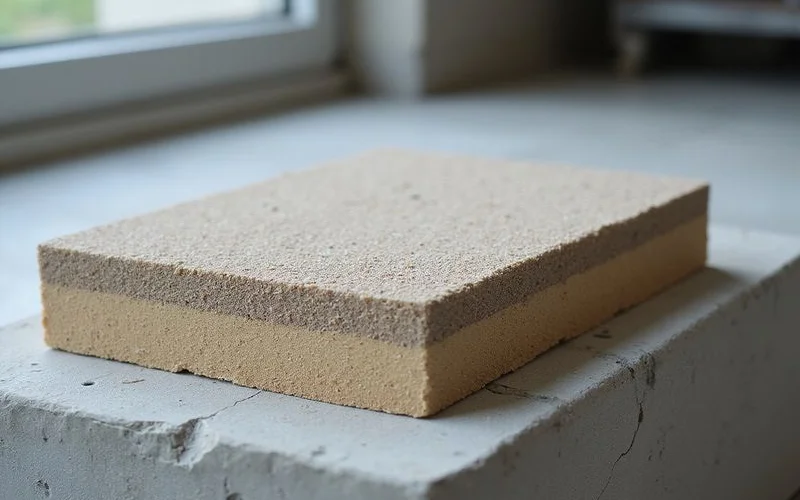
We build a professional pool deck coating in precise, consecutive stages to guarantee mechanical adhesion. Skipping even one of these critical steps compromises the entire project. A high-performance finish relies heavily on proper substrate preparation.
Our installers follow strict industry guidelines to ensure the base layer bonds permanently.
- Surface prep. Contractors diamond-grind the existing deck using 30 to 40-grit metal tooling to reach an industry-standard Concrete Surface Profile of CSP-2. This essential step opens the concrete pores while technicians bridge and repair any existing cracks.
- Base coat. Our technicians then apply a tinted base coat directly to the prepared concrete in your chosen color.
- Aggregate broadcast. An installer broadcasts a non-slip aggregate into the wet coating to give the deck necessary traction. This mechanical texture prevents slips even when the floor is completely soaked.
- UV-stable topcoat. We finish the system with an aliphatic topcoat that seals everything against sun, chlorine, and saltwater.
That final sealing layer acts as a permanent sunscreen for the concrete below. The aggregate broadcast also provides a critical safety feature for wet bare feet.
The Two Main System Types
We typically recommend one of two primary pool deck coating types for exterior projects. Each option provides distinct advantages depending on your budget and long-term goals. Understanding the cost and lifespan differences helps you choose the smartest investment.
UV-stable aliphatic polyaspartic. Our top recommendation is always the premium choice of a polyaspartic pool deck. Aliphatic polyaspartic systems cure up to four times stronger than standard epoxies. They hold their color under direct sun for many years without yellowing.
We see in 2026 industry data that these advanced systems can easily last 15 to 20 years with minimal maintenance.
Acrylic hybrid. A more cost-conscious option is the acrylic-resin hybrid system. These applications reflect heat well and provide a safe walking surface at a lower price point.
Our clients do need to perform more upkeep with these, usually requiring a fresh seal every one to three years. The higher upfront cost of a polyaspartic finish pays for itself by eliminating those frequent repair bills. The chemical resistance of a premium finish easily handles harsh chlorine and acid spills.
The non-negotiable requirement is aliphatic chemistry. We insist that whatever the system, a pool deck coating must be UV-stable. Aromatic epoxy degrades rapidly in the sun. A pool deck is simply the wrong place for an aromatic product.
How It Differs From Paint and Sealer
We frequently get calls from property owners who tried to use basic deck paint to save money. Paint sits weakly on top of the concrete as a thin film. Moisture vapor moving up through the ground easily breaks that weak bond from below.
Our repair jobs often involve grinding away blistered paint that failed after just one summer.
| Feature | Deck paint | Concrete sealer | Pool deck coating |
|---|---|---|---|
| Thickness / build | Thin surface film | No physical thickness | Full multi-layer system |
| Non-slip aggregate | None included | None included | Yes, broadcast into wet base |
| UV stability | Poor to moderate | Highly variable | Engineered aliphatic chemistry |
| Typical lifespan | 1 to 2 seasons | Cosmetic only | 15 to 20 years |
| Moisture resistance | Blisters easily | Repels surface water | Blocks hydrostatic pressure |
A concrete sealer protects against minor stains but adds absolutely no real surface protection. Basic paint will inevitably peel and fade under continuous foot traffic and harsh weather.
We install these complete systems to turn a hot, slick slab into a permanent and safe outdoor feature. A multi-layered installation stops moisture damage and provides four key advantages for your property.
- That structural integrity ensures these engineered surfaces outlast retail products by decades.
- Our process guarantees that your investment remains beautiful and structurally sound for years.
- Upgrading your property directly answers the question of what is pool deck epoxy coating by delivering permanent safety.
- The long-term value makes this choice much smarter than repeating a cheap paint job every spring.
We are ready to help you evaluate your current concrete and choose the perfect custom finish. Schedule your professional consultation today. Take the first step to secure your property against the elements.
Questions about your floor?
Real numbers, no pressure — transparent pricing on every system.