
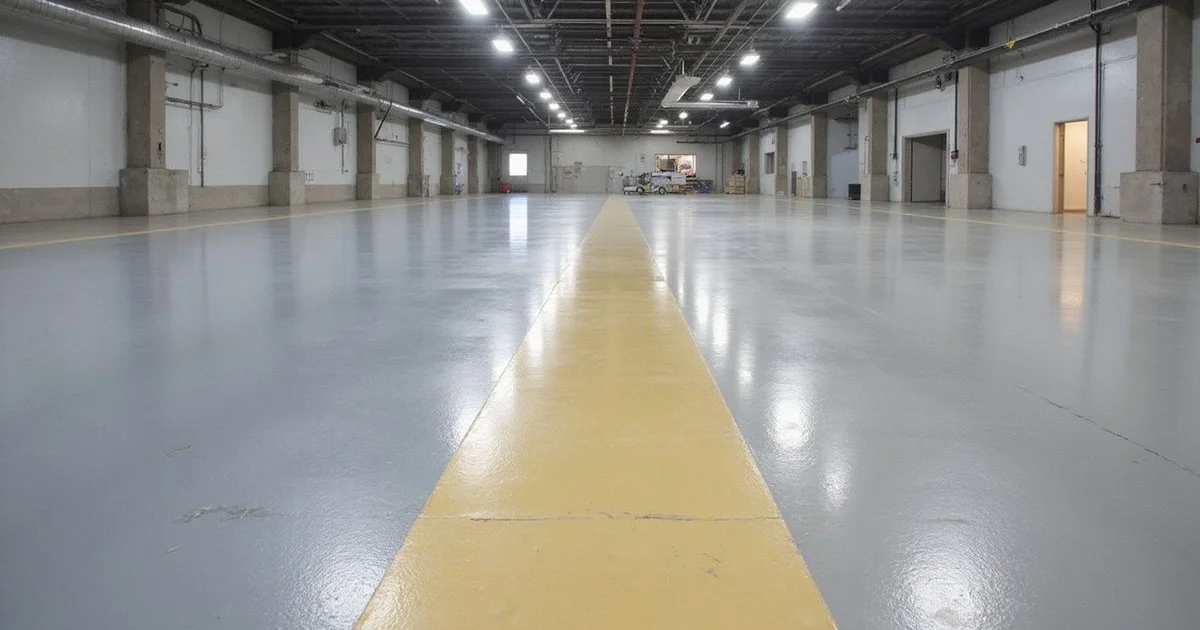
Two Legitimate Commercial Options
We frequently field questions about the epoxy vs polished concrete commercial floor comparison. Both finishes provide highly durable, professional-grade surfaces. There isn’t a single universal answer.
Daily operations dictate the best material for your specific building, so let’s break down the costs, safety standards, and practical maintenance of both systems.
Our team always tells clients honestly if polished concrete serves their needs better during a commercial epoxy consultation. National 2025 cost data indicates that matching the correct flooring system to your environment prevents thousands of dollars in premature replacement costs.
The Head-to-Head
We compare these options directly using upfront pricing, chemical resistance, and safety metrics. Polished concrete involves grinding the existing slab to a sheen, while resin applies a thick protective coating over the top of the slab.
| Factor | Epoxy Flooring | Polished Concrete |
|---|---|---|
| Upfront Cost (2025 US Average) | $5 to $12 per sq. ft. | $2 to $16 per sq. ft. |
| Long-Term Maintenance | Low daily upkeep, recoats needed | Periodic burnishing required |
| Chemical Resistance | High with urethane topcoats | Limited protection against acids |
| Appearance Options | Custom colors, flakes, safety lines | Industrial look, exposed aggregate |
| Slip Resistance (ANSI A326.3) | Highly adjustable with grit | Can be slick when wet |
| Best Application | Auto shops, food service, clinics | Retail stores, dry warehouses |
Our teams see that fundamental difference drive every single line in the table above. The mechanical grinding process hardens the concrete surface directly. Resin coatings create a separate, impermeable shield over the facility floor.
We often advise clients to consider economies of scale for large warehouses. A 5,000-square-foot polished floor project often drops closer to $4 per square foot. High-performance coatings require extensive surface preparation that keeps costs higher for smaller rooms.
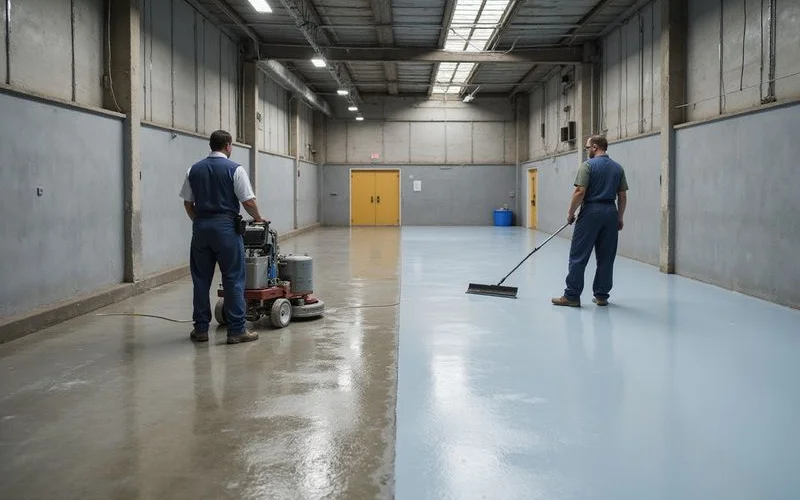
Where Each One Wins
We recommend polished concrete for large retail spaces, and we suggest epoxy wherever chemical resistance matters. The current condition of your concrete slab heavily influences this final recommendation.
When Polished Concrete is the Champion
Our crews install polished finishes in showrooms, grocery stores, and clean, high-foot-traffic environments. This process creates a deliberately industrial aesthetic that appeals to modern brands.
We find this route highly cost-effective when the existing slab remains in excellent condition. Retail stores benefit greatly from the bright, light-reflecting surface that grinding produces. Dense foot traffic rarely damages the hardened concrete surface.
When Epoxy Takes the Lead
Our specialists utilize resin systems for auto shops, manufacturing plants, and high-traffic residential garages. These environments require thick barriers to stop oil, battery acid, and food byproducts from degrading the floor.
We can bridge minor cracks and resurface a damaged slab using a quartz-filled system. Grinding a damaged floor only exposes the flaws. Facility managers also choose this option for safety compliance.
Our installers customize coatings with high-traction aggregate to exceed the ANSI A326.3 dynamic coefficient of friction standard for wet areas. Bright colors and permanent line striping help organize warehouse traffic safely.
The deciding question
Does the floor face chemicals, or need color and striping? Choose epoxy. Is it a dry, clean space where an industrial concrete look is the goal? Polished concrete is a strong, economical choice.
Maintenance Over the Long Run
We remind clients that polished concrete vs epoxy maintenance styles differ drastically over a decade. Neither option is completely maintenance-free.
Our project managers see facilities struggle when they misunderstand the ongoing upkeep requirements. Polished concrete keeps its sheen through frequent burnishing. This recurring maintenance task requires specialized equipment to restore the glass-like finish.
We recommend following a few strict guidelines to protect your investment:
- Use neutral pH cleaners: Acidic solutions quickly etch polished surfaces and dull the shine.
- Schedule periodic burnishing: Mechanical polishing maintains the light reflectivity of exposed aggregate.
- Plan for recoats: High-traffic commercial resin floors generally require a fresh topcoat every 5 to 10 years.
- Clean spills immediately: Prompt cleaning prevents harsh chemicals from staining the surface.
Business owners must evaluate their real in-house capacity before requesting an installation quote. A company with a dedicated janitorial staff easily manages periodic re-polishing.
Our team finds that a busy residential or commercial garage wanting a simple routine heavily prefers a coated surface. Reach out to our experts today to assess your slab and determine the most cost-effective solution for your facility.
Questions about your floor?
Real numbers, no pressure — transparent pricing on every system.