
Epoxy vs Urethane Cement Floor: One Big Difference
When comparing an epoxy vs urethane cement floor, epoxy is a rigid polymer best for stable temperatures, while urethane cement is a flexible hybrid designed to survive extreme thermal shock.
Facility managers often treat these two coatings as identical options. We see this costly assumption play out in commercial spaces across the US every day. To a buyer, both floors look like tough, professionally installed surfaces from our commercial epoxy systems lineup.
That visual similarity hides a massive operational difference. Our installation crews know that getting this one chemical distinction right dictates the success of your entire project. The hidden factor is how the floor handles heat.
Thermal Shock Is the Deciding Factor
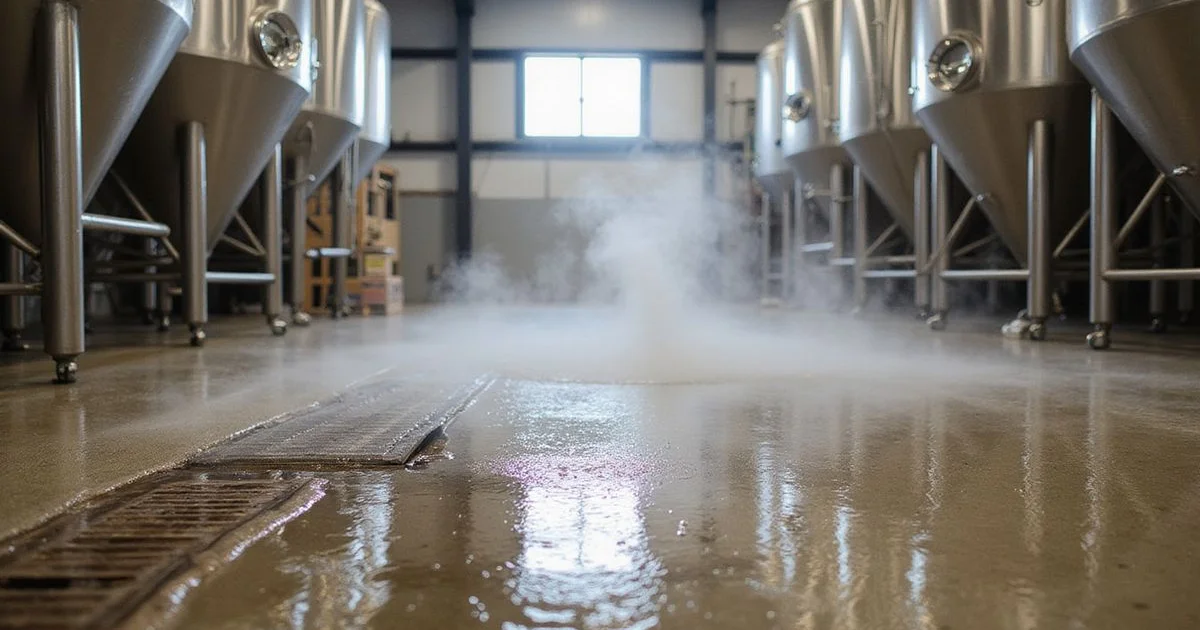
Thermal shock occurs when rapid, repeated temperature swings cause a concrete slab and its coating to expand at different rates. This stress will destroy standard epoxy, making urethane cement the mandatory choice for areas with intense heat fluctuations. We frequently repair floors that look perfectly fine until a hot-water wash-down is introduced.
Standard epoxy is a rigid material. It provides excellent resistance against wear, impacts, and chemicals as long as the room stays at a stable temperature. The coating typically fails when surface temperatures exceed 140 degrees Fahrenheit.
Our repair technicians track specific failure points across commercial facilities. The most common areas for epoxy failure include:
- Directly underneath commercial deep fryers
- Thresholds leading into walk-in freezers
- Drain slopes exposed to hot cleaning liquids
Urethane cement is engineered specifically for thermal cycling to prevent these exact failures. It possesses a coefficient of thermal expansion that closely matches the concrete slab beneath it. We recommend this system because it moves with the slab instead of fighting against it.
The material safely handles extreme temperature ranges from 100 degrees below zero up to 220 degrees Fahrenheit. You will avoid the most common flooring failures by matching the industrial flooring chemistry to your cleaning protocols.
The Full Comparison
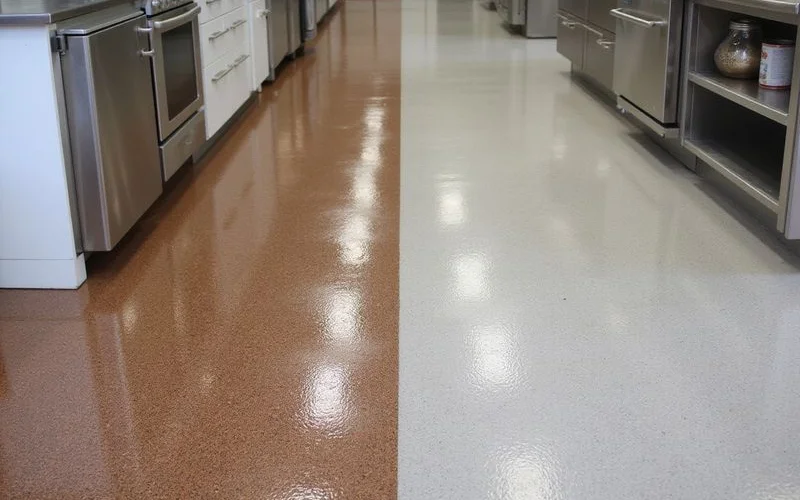
Comparing these systems side-by-side reveals clear differences in temperature limits, chemical resistance, and total installation costs. Standard epoxy offers a lower entry price, while urethane cement delivers superior performance in harsh conditions.
Our estimating team tracks material pricing across the US closely. In 2026, standard commercial epoxy ranges from $4 to $12 per square foot. Urethane cement requires a higher upfront investment, typically running between $7 and $15 per square foot for a heavy-duty installation.
We always tell clients to weigh that initial cost against the expense of replacing a melted floor.
| Factor | Standard Epoxy | Urethane Cement |
|---|---|---|
| Temperature Limit | Up to 140 degrees Fahrenheit | -100 to 220+ degrees Fahrenheit |
| 2026 Average US Cost | $4 to $12 per square foot | $7 to $15+ per square foot |
| Thermal Shock Resistance | Limited (cracks under stress) | Excellent (moves with the slab) |
| Chemical Resistance | Good for general commercial spills | Excellent against harsh organic acids |
| Ideal Environments | Warehouses, retail floors, general | Food prep, breweries, commercial freezers |
The rule that settles it
If the floor will see hot-water wash-down, steam, or freezer cycling, choose urethane cement. If the temperature is stable, choose epoxy to secure a lower cost. Thermal shock is the single question that decides your investment.
Where Each System Belongs
Urethane cement belongs in facilities exposed to thermal cycling and heavy wash-downs, such as breweries and commercial kitchens. Epoxy is the correct choice for climate-controlled warehouses, retail spaces, and dry manufacturing floors. We specify the flooring type strictly based on your daily operations.
Choose urethane cement for high-stress environments. These specific operations will quickly destroy a standard epoxy finish:
- Commercial kitchens performing hot-water wash-downs
- Breweries utilizing 180-degree Clean-in-Place (CIP) sanitation
- Freezer thresholds experiencing constant hot-cold cycles
- Food-production areas requiring USDA and FDA compliance
Our installers regularly build smooth, continuous cove bases in these areas to eliminate grout lines where bacteria hide. You can read our guide on food service applications to understand those exact compliance cases in detail.
Choose epoxy for commercial spaces that stay at a stable temperature. A 100% solids epoxy delivers excellent durability for:
- Warehouses and large distribution centers
- Retail showrooms and big-box stores
- Light manufacturing floors
- General storage and pedestrian corridors
We install thousands of square feet of this material every year across the US. The glossy finish easily handles heavy forklift traffic and standard chemical spills without making you pay the urethane premium.
The honest takeaway is that a urethane cement vs epoxy comparison comes down to your environment. It is the right engineering solution for thermal-cycling environments and the wrong spend for everything else.
We only need to know how hot and how wet your facility runs. The choice then makes itself. Call our office today to schedule a site evaluation and get an accurate estimate.
Questions about your floor?
Real numbers, no pressure — transparent pricing on every system.