
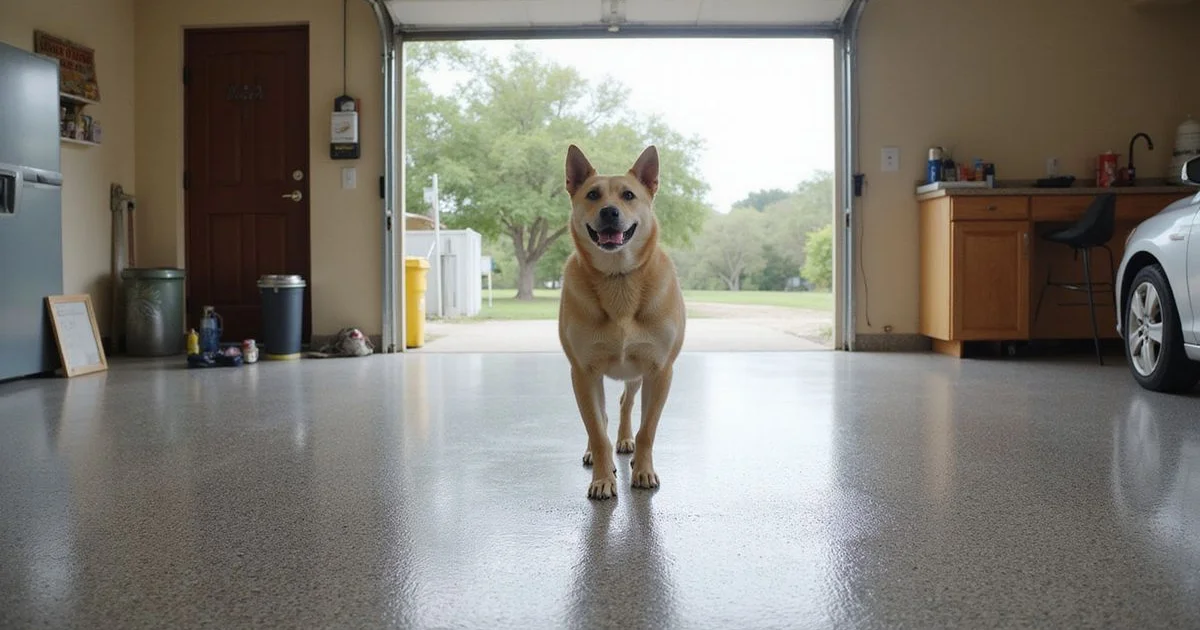
We hear one specific question frequently during initial site visits. Customers always ask us, “is epoxy floor slippery when wet?” to ensure their new surface won’t create a hazard.
Our team tracks U.S. safety data carefully to address this. The Centers for Disease Control and Prevention reported over 8.8 million fall-related ER visits in 2023 alone.
We use this exact data to inform every project design.
Let’s look at the actual safety numbers, the best material choices, and the steps required to keep your space safe.
The Honest Answer: Is Epoxy Floor Slippery When Wet?
Is epoxy floor slippery when wet? The honest answer is that it depends entirely on the finish you select, as a bare, smooth topcoat is quite slick.
We prioritize this conversation early during every garage floor epoxy installation. Humidity, tracked-in rain, and a regular hose-down cleaning routine mean your concrete will inevitably get wet.
Our standard procedure involves designing the right texture profile for your specific climate. A textured flake floor or an aggregate mix creates a highly non slip epoxy garage. The good news is that the most popular, slip-resistant options are very easy to implement.
We identify three common scenarios where wet traction proves critical:
- Climate factors: Melting snow, heavy rain, and high humidity leave standing water behind.
- Vehicle fluids: Oil spills and leaking antifreeze create slippery, hazardous spots.
- Maintenance routines: Washing cars or hosing down the bay guarantees a wet surface.
How Flake and Aggregate Create Traction
Professional floor coatings get their reliable grip from physical textures embedded directly into the resin layer. Two main methods provide this traction safely and effectively.
We rely on these specific techniques to secure firm footing in wet conditions.
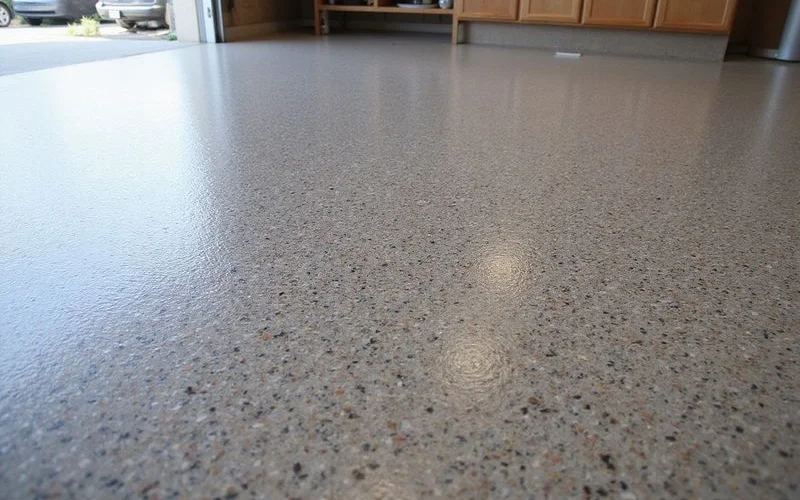
Flake broadcast. A vinyl flake floor is never a smooth sheet of plastic. Thousands of individual chip pieces create a subtly textured surface across the entire room.
Our installers recommend a full flake floor as the default solution for active, humid environments. That texture gives shoes, paws, and bare feet something to grip even with a film of water on top. The flakes add both visual appeal and a massive functional safety upgrade.
Non-slip aggregate. For solid-color and metallic finishes, a fine abrasive material is broadcast into the clear topcoat to add extra grip.
We custom-mix these additives based on the specific safety requirements of your space. It remains invisible from standing height, but the aggregate completely transforms the traction. Different materials serve entirely different purposes depending on foot traffic and maintenance needs.
Our teams generally select from three primary U.S. industry options.
| Additive Type | Best Application | Comfort and Cleaning Profile |
|---|---|---|
| Polypropylene Beads | Residential garages, pool decks | Soft on bare feet, easy to mop |
| Aluminum Oxide | Industrial shops, high-traffic commercial | Highly aggressive, tough on bare feet |
| Silica Sand | Budget-friendly solid color floors | Gritty texture, can trap fine dirt |
Polypropylene materials, often known as shark grip, provide the best balance for residential use. We avoid using heavy aluminum oxide in homes because it can snag mop strings and feels rough on bare feet.
The simple rule
Want a worry-free wet floor? Choose a full-flake finish, or add non-slip aggregate to a solid or metallic topcoat. Both are standard options, not upgrades you have to fight for.
Measuring Slip Resistance
Safety engineers measure slip resistance using the dynamic coefficient of friction, or DCOF. A higher wet DCOF number translates directly to a safer walking surface.
Our commercial projects require strict compliance with the ANSI A326.3 national safety standard. This U.S. standard mandates a minimum DCOF of 0.42 for level, interior floors that get wet.
| Finish | Wet Traction Profile | DCOF Safety Level |
|---|---|---|
| Smooth solid color, no aggregate | Lower, can be slick | Often below 0.42 standard |
| Solid color with aggregate | Good everyday grip | Meets or exceeds 0.42 |
| Full flake broadcast | Good, naturally textured | Exceeds standard easily |
| Flake plus heavy aggregate | Highest commercial grip | Well above 0.65 |
A smooth, coated floor without additives sits dangerously low on that scale. We test our flake and aggregate-enhanced floors to ensure they sit well above the threshold considered safe for residential wet areas. Data from 2026 shows properly textured surfaces routinely achieve DCOF ratings above 0.65.
The takeaway for households with kids, pets, or seniors is very reassuring. An epoxy surface is exactly as safe as you want it to be.
Our process ensures you get confident footing in dry or wet conditions by choosing flake or adding aggregate. The exact same physics drive pool deck slip resistance, where wet traction is strictly non-negotiable. Understanding these facts helps you make the best decision for your property.
We are ready to specify the exact level of texture needed based on your daily activities. Take these simple next steps to ensure a safe installation:
- Assess your risks: Identify if snow, rain, or pool water will reach the area.
- Pick the right texture: Select a full-flake system or polypropylene aggregate for residential comfort.
- Verify the standards: Ask your installer to confirm the floor will meet the 0.42 DCOF U.S. minimum.
A properly installed, slip resistant garage floor protects your family or employees from completely preventable accidents. By selecting the correct aggregate, you never have to worry or wonder, is epoxy floor slippery when wet, ever again. Contact our team today to discuss the perfect safety profile for your upcoming project.
Questions about your floor?
Real numbers, no pressure — transparent pricing on every system.