
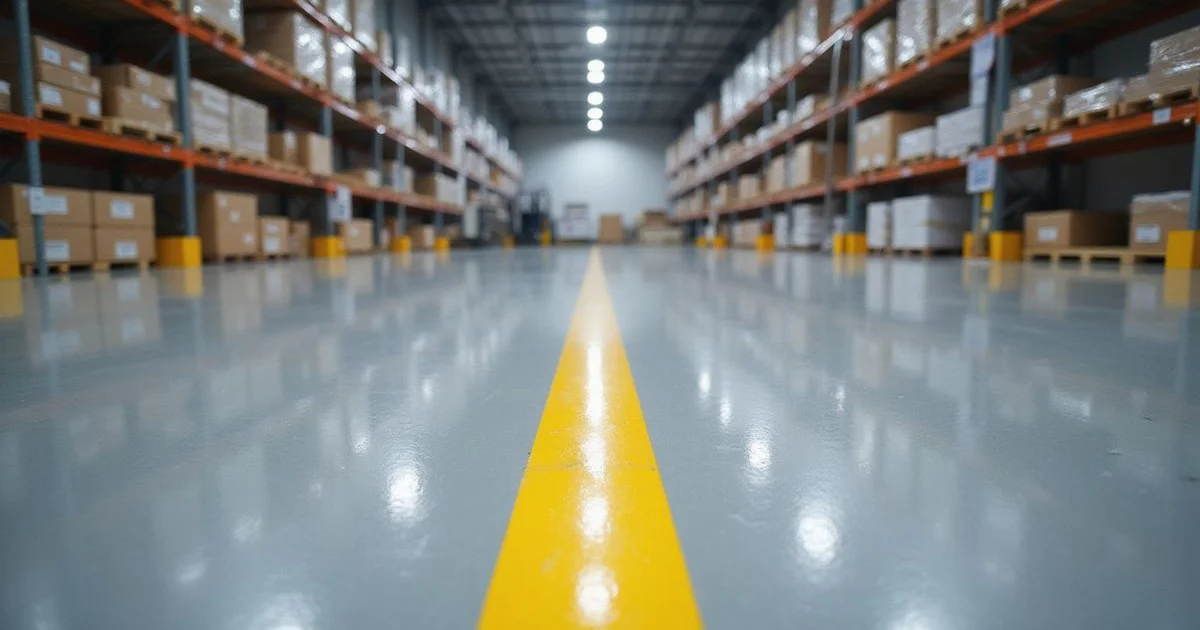
What Is Commercial Epoxy Flooring? More Than One Product
If you are wondering what is commercial epoxy flooring, the most accurate answer is that it represents an entire category of specialized industrial coatings. You understand how quickly a mismatched concrete surface breaks down under heavy traffic. This failure inevitably leads to expensive downtime and constant repairs.
Our commercial epoxy services start with a comprehensive assessment rather than a basic price quote. A logistics warehouse, a craft brewery, and an electronics assembly floor all demand vastly different systems. The specific vehicle traffic, harsh chemical exposures, and strict compliance mandates must drive your final decision.
Let’s review the main coating systems and explore how to match the exact right product to your building’s operational demands.
The Main Commercial Systems
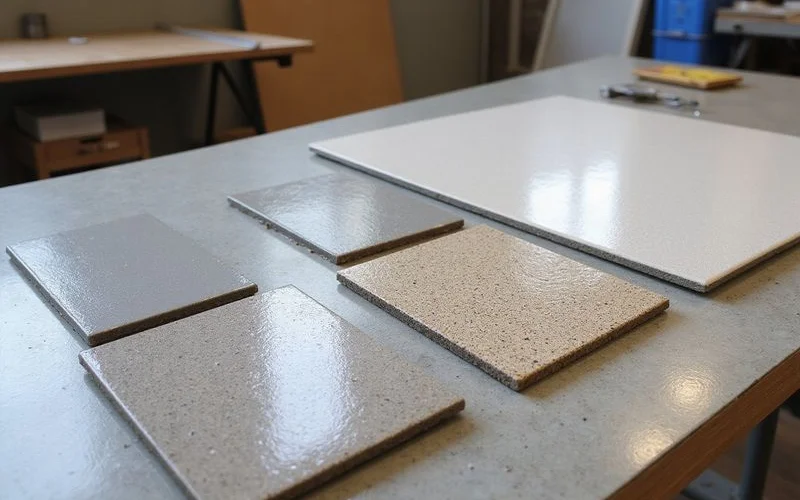
The main commercial systems include 100% solids epoxy, chemical-resistant urethane, urethane cement, methyl methacrylate, and static-dissipative coatings. Selecting the wrong resin formulation from this group often results in premature failure. We evaluate specific metrics like compressive strength and thermal resistance to prevent these costly mistakes.
100% Solids Epoxy
This formulation remains the undisputed workhorse of the American industrial market. With no solvent carrier to evaporate, the entire product cures into a thick, rock-hard bonded layer. It is the perfect choice for warehouses, storage facilities, and general commercial spaces enduring heavy rolling forklift traffic.
A standard 100% solids epoxy application ranges from 12 to 50 mils in thickness. These systems provide exceptional durability, with compressive strengths frequently exceeding 10,000 PSI. Our crews regularly see these well-maintained floors last 15 or more years before requiring a full replacement.
Chemical-Resistant Urethane (CRU)
Some environments require extreme protection against caustic substances. Chemical-resistant urethane is built to actively resist motor oil, hydraulic fluid, solvents, and aggressive cleaning chemicals. This system serves as the required standard for auto repair shops, aircraft hangars, and heavy manufacturing plants.
A topcoat of CRU adds superior abrasion resistance and UV stability. This means the floor will not turn yellow when exposed to direct sunlight near large bay doors. We apply CRU over an epoxy primer to create a tough, stain-proof barrier that handles dropped tools and constant fluid spills.
Urethane Cement
Facilities dealing with extreme heat require a highly specialized approach. Urethane cement provides a dense, thermal-shock-resistant system that absorbs impact energy exactly like the concrete beneath it. It serves as the primary answer for commercial kitchens, deep freezers, and any floor enduring rapid temperature swings.
This system easily withstands continuous surface temperatures ranging from -20°F up to 240°F. Hot-water wash-downs that cause standard epoxies to crack and peel will not phase a urethane cement installation. Our food processing clients rely on this specific chemistry to survive daily pressurized steam cleaning.
Methyl Methacrylate (MMA)
Certain operations cannot afford to shut down for a multi-day curing process. Methyl methacrylate stands out as an extremely fast-curing system utilized when facility downtime must remain minimal. MMA coatings cure so rapidly that the floor can return to full service in just one to two hours.
This rapid turnaround makes MMA ideal for busy retail spaces, 24/7 manufacturing plants, and cold storage units. The unique chemistry allows for application in temperatures as low as -20°F. We recommend this solution when overnight installations are the only viable option for your schedule.
Static-Dissipative (ESD) Coatings
Manufacturing sensitive technology requires strict control over static electricity. ESD coatings safely bleed off static charge to protect delicate components in electronics assembly environments. These specialized floors utilize conductive materials suspended within the resin matrix.
An effective ESD floor typically maintains a conductive resistance range between 2.5 x 10^4 and 1.0 x 10^6 ohms, fully conforming to ANSI/ESD S20.20 standards. This precise electrical control prevents invisible shocks that ruin microchips during production. Our teams test these floors rigorously with specialized meters to ensure total compliance.
Choosing by Facility Type
Matching the exact chemical system to your facility’s daily operations is the only way to prevent disastrous coating failures. The United States Food and Drug Administration enforces strict rules under the Food Safety Modernization Act (FSMA) that dictate specific flooring choices for certain industries. Any facility handling consumable goods must maintain perfectly continuous, crack-free surfaces to eliminate bacterial growth.
We strongly advise installing a four-inch or six-inch integral cove base in any commercial kitchen or food processing plant. This technique smoothly curves the floor coating up the wall, removing the sharp 90-degree corner where contaminants naturally collect. USDA inspectors specifically look for this clear, easily cleanable transition during their routine facility audits.
Here is how these distinct systems map out for common commercial facilities:
| Facility Type | Recommended System | Primary Performance Benefit |
|---|---|---|
| Warehouse & Distribution | 100% solids epoxy | Handles 10,000+ PSI forklift loads |
| Auto Repair Shop | Chemical-resistant urethane | Resists hot oil and hydraulic fluid |
| Brewery & Commercial Kitchen | Urethane cement | Survives 240°F thermal shock |
| Food Production (USDA/FDA) | Urethane cement with cove base | Eliminates bacterial hiding spots |
| Electronics Assembly | Static-dissipative (ESD) | Maintains safe ohm resistance |
| Tight-Downtime Project | Methyl methacrylate (MMA) | Returns to full service in 1-2 hours |
The key point
There is no single “best” commercial floor. The best floor is the one matched to how your facility is actually used. A mismatch, like epoxy in a brewery for instance, is a floor that fails early.
Prep and Surface Profile
Commercial floors demand significantly more aggressive preparation than residential garages, typically requiring a Concrete Surface Profile (CSP) of 4 to 6. Achieving this permanent mechanical bond requires altering the microscopic peaks and valleys of the slab. The International Concrete Repair Institute (ICRI) defines these standardized textures on a scale from one to ten.
Understanding the distinct profile levels prevents premature floor failure:
- CSP 1 to 3: Created by grinding, suitable only for thin residential sealers.
- CSP 4 to 6: Created by shot blasting, required for thick 15 to 50 mil commercial systems.
- CSP 7 to 9: Created by heavy scarification, used for extreme concrete overlays.
We achieve this deep profile exclusively through heavy mechanical shot blasting rather than relying on diamond grinding alone. A typical diamond grinder simply cannot cut deep enough to reach a CSP 4 rating. Thick commercial coatings require these deep valleys to anchor the resin securely into the slab.
Getting both the chemical system and the mechanical prep right separates a strong commercial floor from an expensive disaster. You now understand exactly what is commercial epoxy flooring and why the correct preparation dictates the final lifespan.
The crucial choice between two of the most heavily confused systems is covered in our comprehensive guide on epoxy vs urethane cement. This serves as an excellent next read if your facility runs hot or constantly wet.
We encourage you to review your specific traffic patterns and compliance needs before making a final decision.
Reach out to a professional installation team to schedule a comprehensive on-site slab assessment today.
Questions about your floor?
Real numbers, no pressure — transparent pricing on every system.